Modern story house built from scratchinto comfort and usability
Lorem ipsum dol amet consectetu adipiscing elit, seding doi eiusmod.



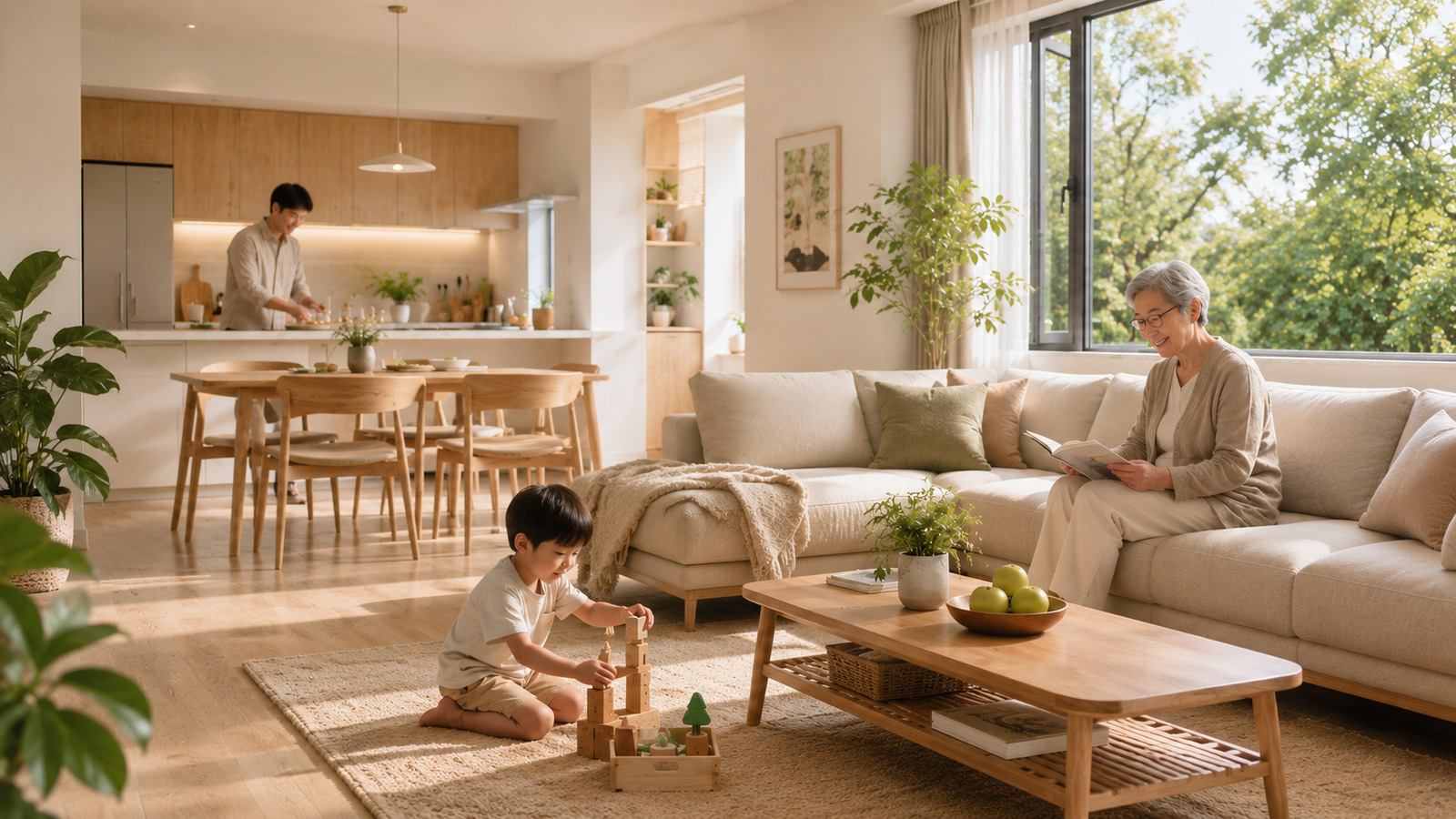
When a home has older adults, babies, young children, or family members with sensitive breathing conditions, renovation decisions should go beyond style, storage, and budget. The real question becomes: how can we create a beautiful home that also feels safer, cleaner, and easier to live in every day?
Low-formaldehyde renovation is not about fear. It is about making smarter choices before materials enter the home. Formaldehyde can be released from many interior products, especially pressed wood, cabinetry, furniture, adhesives, flooring, paint-related products, and some fabrics. The CDC notes that higher formaldehyde levels may cause irritation of the eyes, nose, throat, skin, or breathing problems in some people. For families with seniors or children, reducing unnecessary indoor emissions should become a core part of the renovation plan.
NANHONGDINGYU focuses on whole-home custom interiors, including layout planning, material selection, design development, manufacturing, delivery, installation, and after-sales support. The company’s service model is built around making custom homes simpler, with structured steps from consultation and measurement to design, production, installation, and follow-up service. That kind of complete process is especially important for low-formaldehyde renovation, because healthier indoor space depends on coordinated decisions—not just one “eco-friendly” product.
Children often play close to the floor, touch surfaces frequently, and spend long hours in bedrooms, living rooms, and study areas. Seniors may also spend more time indoors, especially in bedrooms, living rooms, dining areas, and quiet resting spaces. If a newly renovated home contains many high-emission materials at once, the indoor air can feel uncomfortable even if the space looks beautiful.
Low-formaldehyde renovation aims to reduce the total emission load. Instead of asking whether one board, one cabinet, or one paint product is “safe enough,” families should consider the entire home as one indoor environment. A wardrobe, TV cabinet, kitchen cabinet, wall panel, bed frame, bookshelf, and flooring system may all release small amounts of indoor pollutants. When they are installed together, the combined effect matters.
Many materials release more emissions when they are new. The EPA explains that formaldehyde can come from pressed wood products and recommends increasing ventilation, especially after bringing new formaldehyde sources into the home. It also recommends maintaining moderate temperature and humidity levels.
This means timing is part of health-focused renovation. Families should not design, install, clean, and move in immediately without giving the space enough ventilation time. A better plan starts with material selection, continues through factory production and installation, and ends with proper airing, cleaning, testing when needed, and gradual move-in.
Pressed wood is one of the most important categories to understand. Particleboard, MDF, plywood, and other engineered panels may contain adhesives or resins that can release formaldehyde. The EPA recommends asking about the formaldehyde content of pressed wood products before purchasing building materials, cabinetry, and furniture.
For whole-home customization, cabinetry is often the largest material system in the house. Wardrobes, kitchen cabinets, bathroom cabinets, shoe cabinets, sideboards, children’s study desks, storage walls, and TV units can contain large panel areas. This is why custom furniture planning should not only focus on color, texture, and storage capacity. It should also include board grade, edge sealing, surface finish, hardware quality, and installation method.
Flooring covers a large area, so families should be careful when choosing engineered wood flooring, laminate flooring, or composite decorative panels. Wall panels and background walls can also increase the amount of indoor material surface area. A design that uses too many decorative boards may look premium in a rendering, but it can also increase indoor emission sources if the material selection is not controlled.
For homes with children or seniors, a cleaner design often works better. Large areas of simple wall finishes, limited decorative paneling, and carefully selected built-in storage can create a refined look while reducing unnecessary material load.
Formaldehyde and VOC concerns are not limited to boards. Adhesives, sealants, coatings, paints, and varnishes can also affect indoor air. The CDC states that formaldehyde can be released into indoor air from construction materials and consumer products, and that ventilation helps reduce levels.
A low-formaldehyde renovation should therefore control hidden materials as well as visible ones. A cabinet may use a good panel, but if installation relies on excessive glue or poor-quality sealant, the overall air quality may still suffer. A professional renovation process should reduce unnecessary wet work, use cleaner installation methods, and avoid over-layering materials.
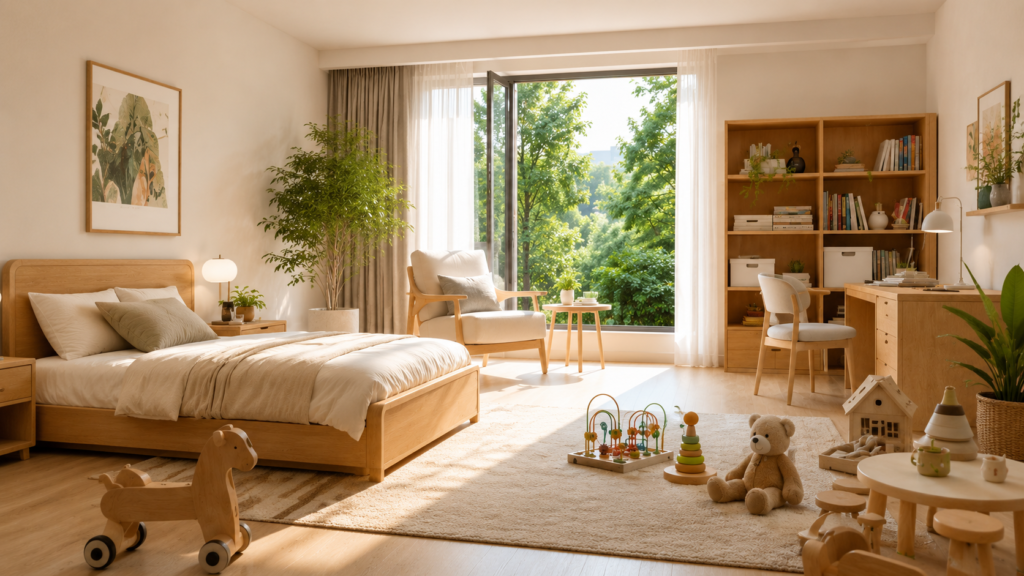
The most effective approach is source control. Air purifiers and ventilation help, but they cannot fully compensate for poor material choices. Families should first ask for clear information about panels, adhesives, finishes, and certifications. For custom cabinetry, material selection should happen before design confirmation, not after.
NANHONGDINGYU’s whole-home customization service includes material selection, design development, manufacturing, and on-site installation. This gives families an opportunity to discuss low-formaldehyde priorities at the beginning of the project. For example, the design team can recommend suitable boards for bedrooms, children’s rooms, elderly rooms, and storage-heavy spaces.
Before confirming a renovation plan, families should ask:
What board type will be used for wardrobes, cabinets, and storage systems?
What emission standard or certification does the material meet?
Are the panel edges properly sealed?
Will the same material be used throughout the home, or can sensitive areas use upgraded materials?
What adhesives, sealants, and finishing products will be used during installation?
Can the family see physical material samples before production?
These questions are not overly technical. They help the homeowner understand what will actually enter the home.
A low-formaldehyde home does not need to look plain. It simply needs a more disciplined design approach. Instead of covering every wall with panels, building oversized decorative shapes, or adding unnecessary storage, families should prioritize function, comfort, and long-term use.
For elderly family members, clear walking paths, stable storage, accessible handles, and soft lighting are more valuable than heavy decorative features. For children, rounded corners, easy-to-clean surfaces, safe storage height, and durable materials matter more than complicated styling.
A simple, well-planned interior can feel more premium than an over-decorated one. The key is proportion, material harmony, lighting, and storage planning.
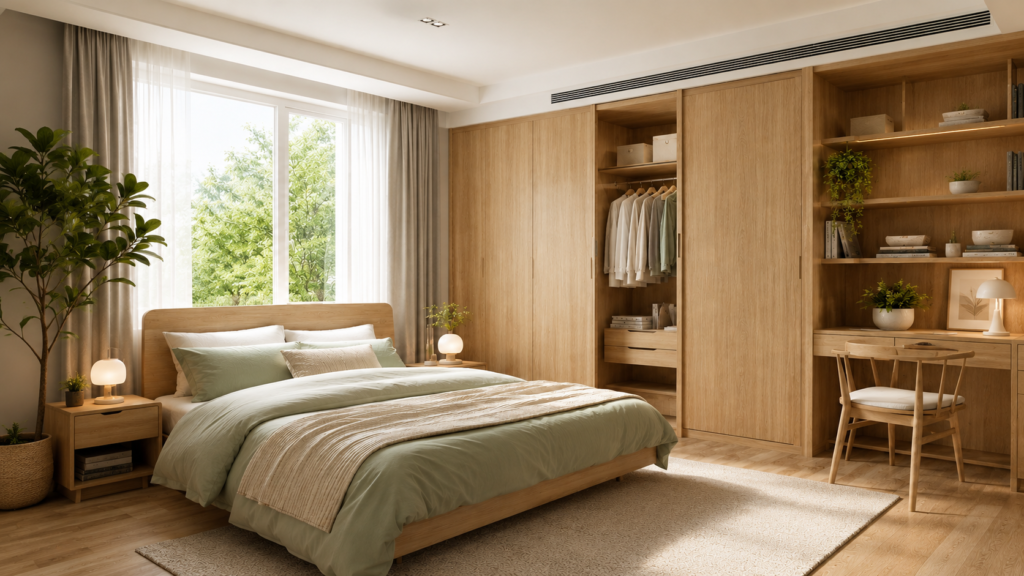
The living room usually contains large furniture pieces: TV cabinets, display shelves, coffee tables, sofas, wall panels, and storage units. To reduce formaldehyde risk, avoid using too many large-area engineered panels on the walls. Choose a focused storage design instead.
A good living room plan may include one main custom TV wall, a limited number of closed cabinets, and open breathing space around seating. If seniors use the living room often, keep the floor clear and avoid sharp furniture edges. If children play there, use easy-to-clean finishes and stable cabinet structures.
NANHONGDINGYU presents whole-home custom interiors designed around daily life, with living room customization as one of its service areas. For a family-focused living room, the design should balance appearance, storage, traffic flow, and material safety.
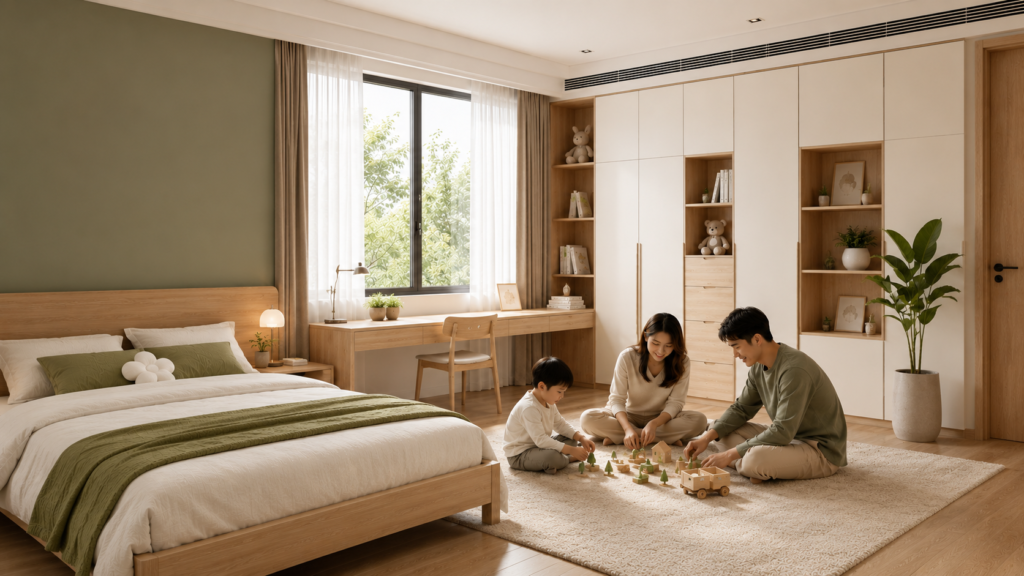
Bedrooms deserve the strictest material control because people spend long hours sleeping there. Wardrobes, beds, nightstands, desks, and wall panels can all contribute to indoor emissions. If the family has seniors or children, bedroom renovation should avoid unnecessary built-in panels around the bed.
Choose lower-emission wardrobe boards, reduce excessive decorative backboards, and allow enough ventilation after installation. Soft furnishings should also be selected carefully. New mattresses, curtains, carpets, and upholstered furniture may have odors or emissions, so they should be aired out before use.
For seniors, bedroom design should also include comfortable movement space, accessible storage, warm lighting, and simple surfaces that are easy to maintain. For children, choose durable, washable finishes and avoid creating too many hard-to-clean corners.
A child’s room should not be treated as a showroom. Many families add colorful wall panels, large desks, full-height wardrobes, platform beds, bookcases, toy cabinets, and themed decorations all at once. This can create a heavy material load in a small space.
A healthier children’s room should be lighter and more flexible. Use fewer fixed cabinets, choose safer boards, keep the desk and bed area simple, and leave open floor space. Children grow quickly, so flexibility is better than over-customization.
Instead of filling the room with built-ins, focus on three essentials: sleep, study, and storage. A wardrobe, a safe bed, and a practical desk may be enough. Decorative personality can come from removable items such as bedding, framed prints, lamps, and soft accessories.
An elderly room should feel calm, practical, and easy to use. Low-formaldehyde renovation is important, but so is comfort. Avoid strong odors, complicated wall treatments, and excessive built-in structures. Select stable furniture, smooth cabinet doors, accessible shelves, and lighting that reduces eye strain.
The room should have good airflow. After installation, open windows when outdoor conditions allow, use fans to support air movement, and keep the room from becoming too hot or humid. The EPA recommends using air conditioning and dehumidifiers to maintain moderate temperature and reduce humidity, because these conditions can affect formaldehyde levels.
Kitchens often contain many cabinets, so material selection is critical. A family with children or seniors should choose durable cabinet boards, sealed edges, reliable hardware, and easy-to-clean finishes. Because kitchens also produce heat and moisture, ventilation is especially important.
Dining areas should avoid unnecessary wall paneling if the space is small. A simple sideboard with lower-emission materials may be enough. NANHONGDINGYU includes dining and kitchen storage in its whole-home customization service, which makes it possible to plan storage as part of the overall interior instead of adding random furniture later.
Entryways often include shoe cabinets, storage benches, wall hooks, and display areas. Since shoe cabinets are enclosed, ventilation and material choice both matter. Use well-sealed panels, avoid excessive glue, and consider breathable design details where appropriate.
Multi-functional rooms need careful planning. A guest room that also works as a study, storage room, or child activity room should not become a place where every leftover cabinet is installed. Keep the design clear and avoid stacking too many material systems into one small room.
A healthier renovation starts with clear communication. During consultation, the family should explain who will live in the home, whether there are seniors, children, pregnant family members, or people sensitive to odors, and when the family hopes to move in.
NANHONGDINGYU’s process begins with consultation and measurement, where the team understands needs, style preferences, budget, and space dimensions. For low-formaldehyde renovation, this stage should also include health priorities and move-in timing.
During design development, the goal is not just to make a beautiful rendering. The design should reduce unnecessary material use, improve airflow, and choose the right level of customization for each room.
NANHONGDINGYU provides layout plans, cabinet designs, material selections, and 3D visual presentations before production. This “preview before production” approach is helpful because homeowners can review the design, reduce excessive cabinets, adjust room functions, and confirm materials before the factory starts cutting panels.
Factory production can help improve consistency. When panels are processed, hardware is prepared, and products are inspected before shipment, the project becomes more predictable. NANHONGDINGYU states that materials are prepared, panels are processed, hardware is pre-installed, and orders are inspected before shipment.
For low-formaldehyde goals, this stage should include careful edge sealing, accurate cutting, clean processing, and quality control. Better production reduces the need for excessive on-site modification, which can also reduce dust, odor, and installation mess.
Installation should follow approved drawings. A clean installation process avoids unnecessary cutting, gluing, and rework inside the home. Families should keep rooms ventilated during and after installation when possible.
NANHONGDINGYU arranges delivery and completes on-site installation according to approved drawings. That structure matters because low-formaldehyde renovation depends on execution. Even good materials can perform poorly if installation is careless.
After installation, families should ventilate the home properly. Open windows when outdoor air quality and weather allow. Use exhaust fans, air movement, and humidity control. Avoid sealing the home completely right after renovation.
The CDC/ATSDR recommends keeping homes well ventilated by opening windows or using ventilation fans when formaldehyde levels are known to be high. For homes with children or seniors, it is better to build in a buffer period before moving in. During this period, remove packaging, clean surfaces, open cabinet doors and drawers periodically, and keep indoor temperature and humidity moderate.
Some homeowners focus only on the cabinet board and ignore flooring, wall panels, adhesives, curtains, mattresses, sofas, and loose furniture. Low-formaldehyde renovation requires total control. Every new product adds to the indoor environment.
A strong smell may indicate indoor air concerns, but no smell does not always mean zero emissions. Families should not rely only on odor. They should choose better materials from the start, ventilate properly, and use professional testing if they need more confidence before moving in.
Many families rush because they have a school schedule, lease deadline, or family timeline. But for seniors and children, it is better to plan backward from the move-in date. NANHONGDINGYU notes that a typical whole-home customization project can take about one to one and a half months from measurement to installation. Families should add ventilation and cleaning time after installation rather than treating installation day as move-in day.
Storage is useful, but too much custom cabinetry can increase material volume. A good designer should ask what the family truly needs to store and where. The best low-formaldehyde design uses enough storage, not maximum storage.
Confirm which rooms are used by children and seniors.
Choose lower-emission boards for bedrooms and children’s rooms.
Reduce unnecessary wall panels and decorative built-ins.
Ask for material samples and product information.
Review whether the design uses too much cabinetry.
Plan a realistic move-in schedule.
Confirm panel type, finish, color, hardware, and edge sealing.
Review 3D renderings and CAD drawings carefully.
Remove unnecessary cabinets before production starts.
Make sure sensitive rooms have simpler layouts.
Confirm installation details and timeline.
Open cabinets, drawers, and interior storage spaces.
Ventilate the home regularly.
Control humidity and temperature.
Clean dust and surfaces carefully.
Delay move-in when possible.
Consider professional indoor air testing if the family wants extra assurance.
A low-formaldehyde renovation is not one single product or one marketing label. It is a complete design and execution strategy. For families with seniors or children, every decision matters: board selection, cabinet quantity, room layout, surface finish, installation method, ventilation time, and after-sales support.
A beautiful home should not only photograph well. It should support daily life, protect comfort, and give the family confidence after move-in. By choosing cleaner materials, reducing unnecessary decoration, planning storage wisely, and following a structured custom interior process, homeowners can create a space that feels refined, practical, and more suitable for sensitive family members.
NANHONGDINGYU helps families plan whole-home custom interiors from consultation and measurement to design, production, installation, and after-sales support. For families who care about both design quality and healthier living, that complete approach makes low-formaldehyde renovation easier to manage, easier to understand, and easier to trust.
Low-formaldehyde renovation means choosing materials, furniture, cabinetry, flooring, paint, adhesives, and finishes that release fewer indoor pollutants. It focuses on reducing formaldehyde sources before installation instead of only relying on ventilation after renovation.
Children and seniors may be more sensitive to indoor air quality. A low-formaldehyde renovation helps create a cleaner, more comfortable home environment by reducing unnecessary emissions from new cabinets, flooring, wall panels, furniture, and decorative materials.
Common sources include engineered wood panels, MDF, particleboard, plywood, laminate flooring, custom cabinets, wall panels, adhesives, sealants, and some furniture products. That is why material selection should be reviewed before production and installation.
Start by choosing lower-emission materials, reducing excessive built-in cabinetry, avoiding over-decoration, using safer adhesives and finishes, improving ventilation, and allowing enough time before moving in. Source control is more effective than trying to fix the problem later.
Yes. After installation, open windows when possible, keep cabinets and drawers open for airflow, use fans to improve circulation, and control indoor humidity. Proper ventilation helps reduce indoor pollutant concentration after new materials are installed.
Yes. Custom cabinetry can work well in a low-formaldehyde home when you choose better boards, sealed edges, reliable finishes, and a professional installation process. NANHONGDINGYU can help families plan whole-home custom interiors with both design quality and healthier living in mind.
 03Jul
03Jul
 04Jul
04Jul
 by
by