Modern story house built from scratchinto comfort and usability
Lorem ipsum dol amet consectetu adipiscing elit, seding doi eiusmod.



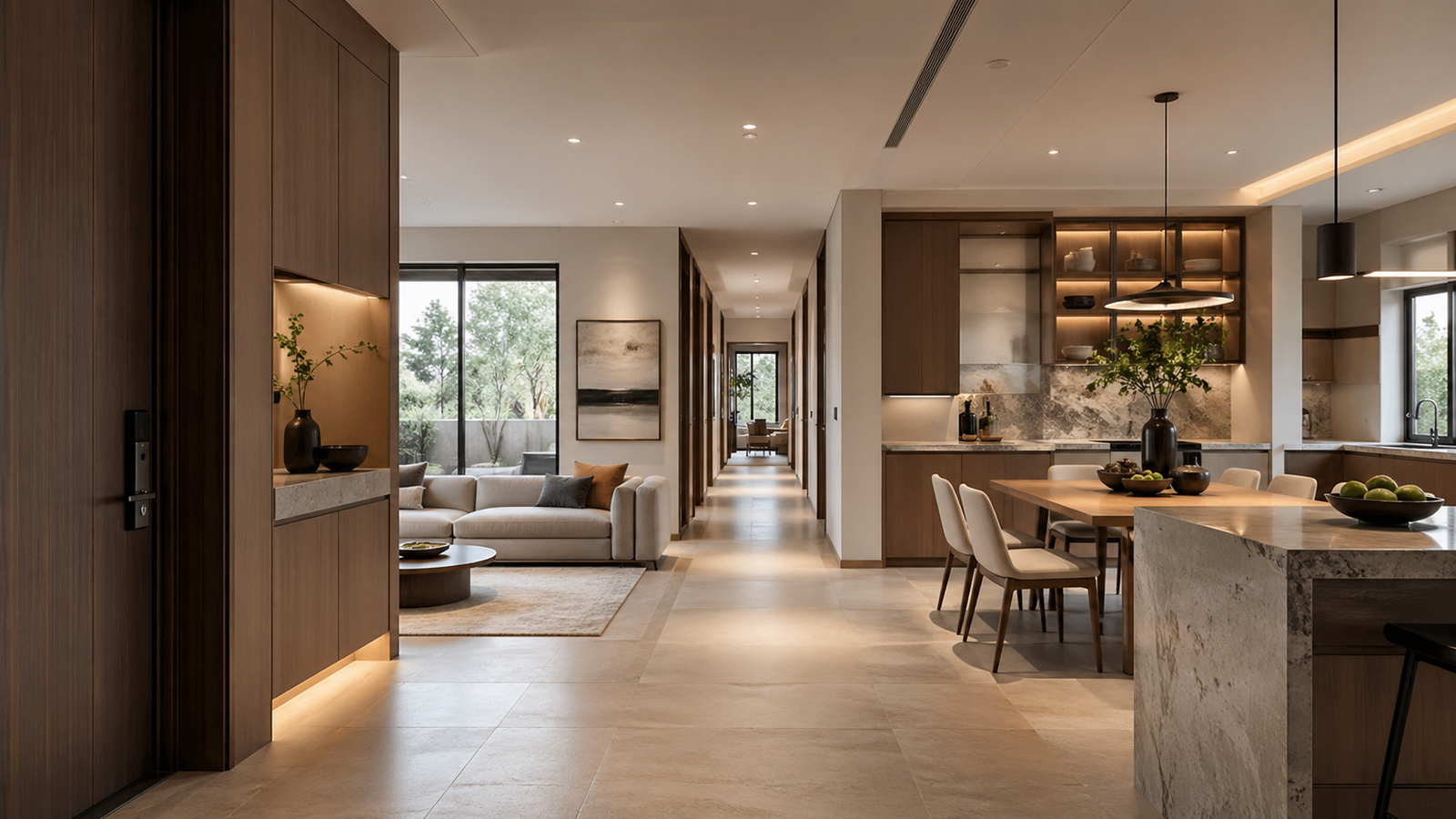
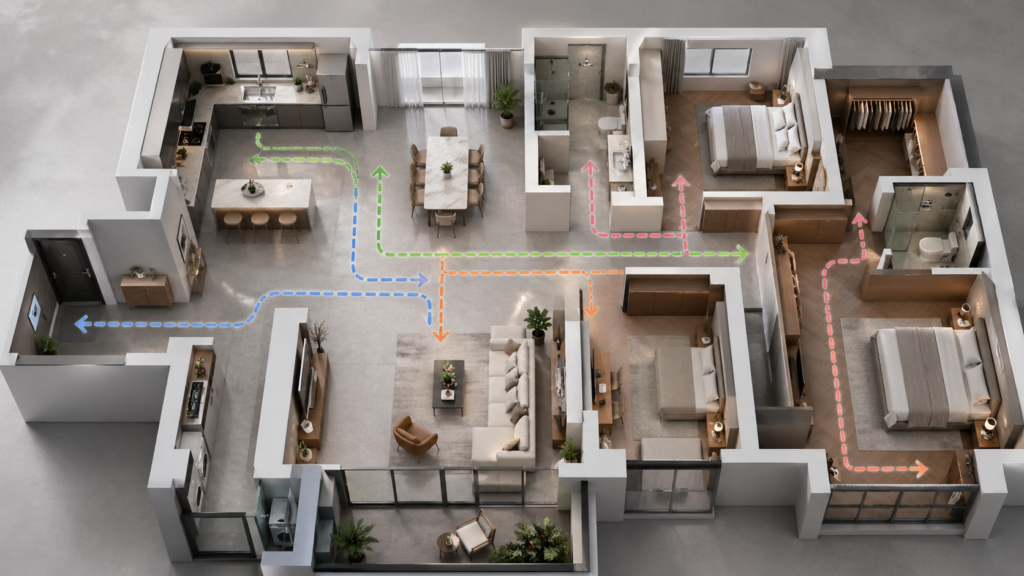
The true measure of a beautifully designed home extends far beyond its aesthetic appeal; it is deeply rooted in how the space feels and functions on a daily basis. Have you ever walked into a stunningly decorated house, only to feel inexplicably cramped, disoriented, or frustrated when trying to move from one room to another? This jarring experience is usually the result of poor spatial planning. In the realm of professional interior design, the invisible yet palpable force that dictates the comfort and utility of a living space is known as “whole house circulation.”
Circulation refers to the pathways and physical trajectories that human beings take as they move through an environment. It is the architectural choreography of your daily life. Whether you are carrying heavy groceries from the garage to the kitchen pantry, rushing to get dressed and out the door on a busy weekday morning, or hosting an elegant dinner party for close friends, the layout of your home should facilitate these activities seamlessly. At NANHONGDINGYU, we believe that exceptional design is fundamentally invisible—it simply works. Our philosophy is built on the understanding that a well-crafted circulation plan transforms a mere collection of rooms into a cohesive, intuitive sanctuary. This comprehensive guide will explore the profound impact of interior traffic flow and how you can optimize every square foot of your property.
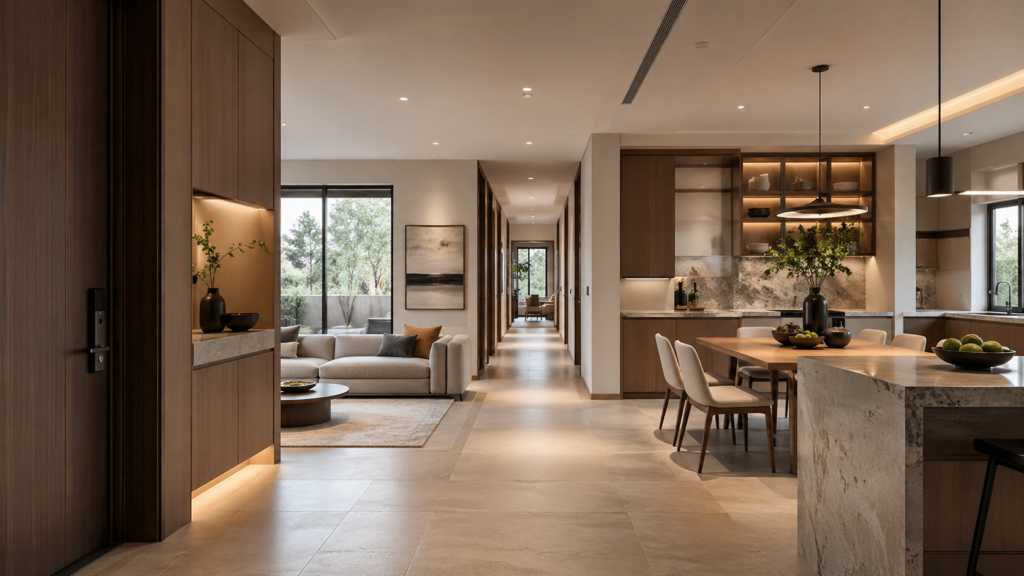
Before diving into specific room layouts and furniture placements, it is essential to understand the underlying principles that govern human movement within enclosed spaces. Circulation is not merely about drawing straight lines on a floor plan; it is about psychology, ergonomics, and the rhythm of daily life.
Human beings naturally seek the path of least resistance. When we navigate our homes, we subconsciously look for the most direct and unobstructed routes to our destinations. If a layout forces occupants to weave awkwardly around oversized sofas, squeeze past sharp countertop corners, or backtrack through tight corridors, it generates subtle but cumulative psychological stress.
Furthermore, circulation dictates the transition between different emotional states. The journey from the bustling, public environment of the street into the private, restorative atmosphere of the bedroom requires transitional spaces that allow the mind to decompress. Effective whole house circulation maps out these transitions, using visual cues, lighting, and spatial proportions to guide both the body and the mind.
Physical movement is only half of the equation; visual circulation is equally important. This refers to how your eyes travel through a space. A brilliantly designed home uses sightlines to create a sense of expansiveness and invitation. For instance, standing in the entryway and having a clear, unobstructed view straight through to the backyard garden immediately makes the home feel larger and more connected to nature. At NANHONGDINGYU, our design teams meticulously plan these sightlines, ensuring that architectural focal points—such as a beautiful fireplace, a statement staircase, or a sweeping window—draw the eye and naturally encourage movement in the right direction.
To effectively manage the complex traffic patterns of a modern household, interior architects categorize whole house circulation into three distinct “lines” or pathways. Understanding and segregating these lines is the secret to a harmonious home where different activities can occur simultaneously without clashing.
The family living line represents the most frequently used pathways in the home. This is the circulation route utilized by the primary residents as they go about their intimate daily routines. It encompasses the journey from the bedrooms to the bathrooms, the path from the private quarters to the kitchen for breakfast, and the movement into the family room for evening relaxation.
Because this line is heavily trafficked, it must be highly prioritized in the floor plan. The family living line should be private, comfortable, and highly efficient. Ideally, occupants should be able to move between their bedrooms and the laundry area or kitchen without crossing through formal entertainment spaces, ensuring that the messy reality of family life remains comfortably hidden from unexpected visitors.
Perhaps the most critical yet frequently overlooked aspect of spatial planning is the chore and service line. This pathway dictates how the functional, laborious tasks of running a household are executed. It includes carrying groceries from the entryway or garage to the kitchen, moving dirty clothes to the laundry room, taking out the trash, and maneuvering cleaning equipment like vacuums throughout the house.
The primary goal of the service line is absolute efficiency. These pathways should be as short, direct, and unobstructed as possible. For example, a poorly designed service line might force you to carry dripping garbage bags across the pristine living room rug to reach the exterior bins. A well-designed service line, which is a hallmark of NANHONGDINGYU‘s approach, integrates side entrances, mudrooms, and strategically placed utility closets to keep the mechanics of household maintenance completely separate from the leisure areas.
The guest line outlines the experience of visitors entering your home. It begins at the front door and typically flows into the foyer, the formal living room, the dining room, and the guest powder room. The design objective here is to create a welcoming, intuitive, and impressive journey.
Guests should never feel lost or unsure of where to go. The architecture and interior layout should subtly guide them toward the social hubs of the house. Crucially, the guest line should rarely, if ever, intersect with the private family line or the messy service line. When you host a gathering, your guests should be able to navigate the entertainment spaces effortlessly without accidentally wandering into a private home office or a cluttered laundry space.
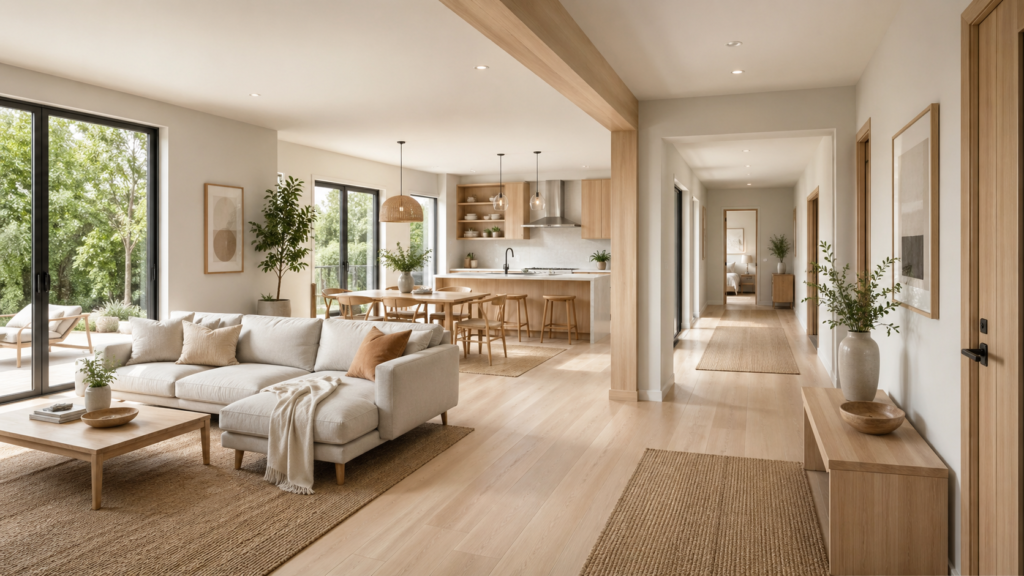
With the foundational pillars established, we can examine how to apply these concepts to specific areas of the home. Each room serves a unique purpose and requires a tailored approach to traffic flow.
The entryway is the handshake of your home. It sets the tone for everything that follows. However, it is also a highly functional space that must handle the transition between the outside world and the private interior.
A successful entryway requires a designated “landing zone.” This is a dedicated area where residents and guests can comfortably remove coats, shoes, and drop keys or mail. If the circulation space here is too tight, it creates an immediate bottleneck. People end up clustered at the door, unable to move past one another. We recommend allowing a minimum clearance of at least four to five feet in the primary entryway to ensure a smooth, welcoming transition. Incorporating built-in benches and concealed storage helps keep the pathway clear of tripping hazards.
The living room is the central gathering space, meaning it has multiple entry and exit points. The biggest mistake homeowners make in this space is pushing all the furniture against the walls, creating a vast, empty dance floor in the middle of the room, or conversely, packing the room with oversized pieces that block natural pathways.
To optimize circulation in the living room, furniture should be arranged to facilitate conversation while allowing traffic to flow around the seating group, rather than through it. If a pathway cuts directly between the sofa and the television, the relaxed atmosphere is constantly interrupted by people walking past. By floating furniture away from the walls and defining the circulation routes with area rugs, you create a cozy, protected zone for relaxation.
Nowhere is circulation more critical—and potentially more dangerous—than in the kitchen. This space involves heat, sharp objects, and multiple people working simultaneously.
Historically, kitchen design relied heavily on the “Work Triangle,” which dictates the distance between the sink, the stove, and the refrigerator. While this concept remains valid, modern kitchens, particularly large open-concept ones, require a more nuanced approach. Today, we design for “Work Zones.”
There should be a distinct circulation path for food preparation, another for cooking, and a separate route for cleanup. Furthermore, if you frequently entertain, there must be a designated path for guests to access beverages or snacks without crossing into the hot cooking zone. At NANHONGDINGYU, we frequently utilize expansive kitchen islands to physically separate the chef’s workspace from the social seating area, ensuring safety and uninterrupted flow. Walkways in a kitchen should ideally measure between 42 and 48 inches wide to allow two people to pass each other comfortably.
In the private sectors of the home, circulation focuses on tranquility and logical sequencing. The master suite, in particular, should function as a cohesive ecosystem.
Consider the morning routine: waking up, showering, getting dressed, and leaving the room. The physical layout should support this sequence. The pathway from the bed to the ensuite bathroom should be direct and free of obstacles, which is especially important for safety during the night. Similarly, the walk-in closet should be positioned logically between the bathroom and the bedroom exit to streamline the dressing process.
Even with the best intentions, certain design pitfalls can severely compromise the flow of a home. Being aware of these common errors is the first step toward creating a superior living environment.
The maze effect occurs when a floor plan is overly compartmentalized or when furniture placement defies logic. If you have to zig-zag sharply to get from the dining table to the kitchen, or if you must navigate a labyrinth of small, dark hallways to reach a guest bedroom, the home will feel inherently stressful. Good circulation favors clean, straight lines and gentle, sweeping curves. Every time you force a sharp turn or introduce an obstacle, you disrupt the kinetic energy of the space.
A beautifully drafted floor plan can be completely ruined by inappropriately scaled furniture. A massive sectional sofa might look fantastic in a showroom, but if it leaves only a 24-inch walkway in your family room, it becomes a daily nuisance. Proper circulation requires a strict adherence to spatial clearances. Standard interior design guidelines dictate a minimum of 36 inches for primary hallways and major walkways, and at least 18 inches between a sofa and a coffee table. Respecting these dimensions is crucial for preserving the physical flow.
Poor circulation often results in “dead zones”—areas of the home that are awkwardly shaped, difficult to access, or serve no discernible purpose. A wide, empty corridor that does nothing but connect two rooms is wasted square footage. In a truly optimized home, every inch serves a purpose. We transform potential dead zones into functional assets by integrating built-in bookshelves, cozy window seats, or compact home office nooks, thereby giving residents a reason to interact with the space rather than simply passing through it.
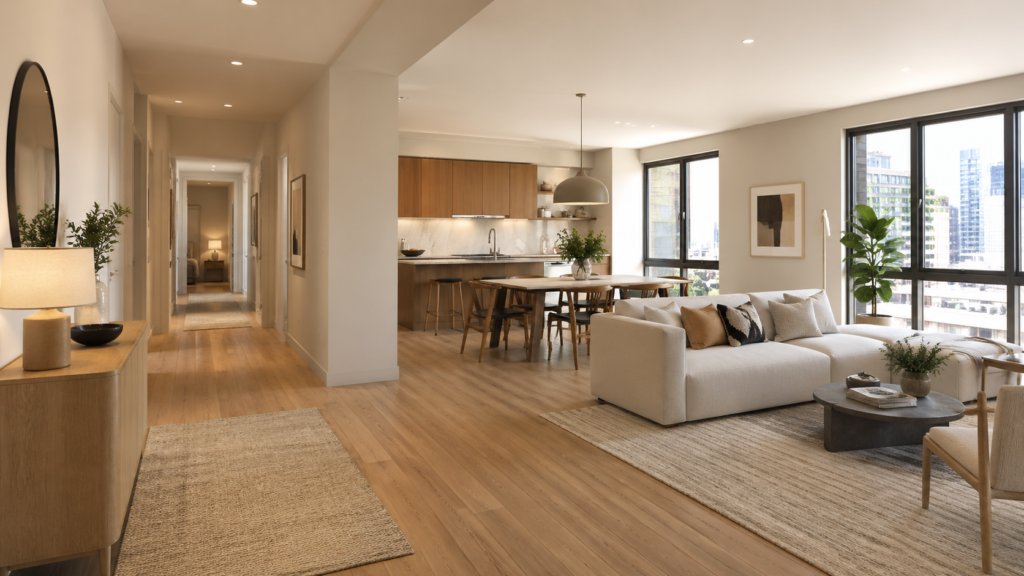
A home is a long-term investment, and its layout should be able to adapt to the changing needs of its inhabitants over time. This concept, often tied to “Universal Design,” ensures that the whole house circulation remains effective for decades.
When planning the circulation of a forever home, it is wise to consider the principles of aging in place. This means creating pathways that are wide enough to accommodate mobility aids, such as walkers or wheelchairs, should they ever be needed. It involves minimizing thresholds and steps between different living areas to prevent tripping hazards. By designing wider doorways (ideally 32 to 36 inches clear) and ensuring that at least one full bathroom and bedroom are accessible on the ground floor, you create a home that flows perfectly for people of all ages and physical abilities.
Finally, it is impossible to discuss circulation without addressing the profound impact of lighting. Illumination is the silent guide that directs movement through a house, particularly at night. A well-designed lighting plan uses ambient lighting to wash the primary pathways, ensuring safe navigation. Task lighting illuminates functional zones like kitchen counters, while accent lighting draws the eye toward destinations, such as a beautifully lit piece of artwork at the end of a hallway. Smart home systems can now be integrated to automatically illuminate the family living line as you walk from the bedroom to the kitchen in the dark, seamlessly blending technology with architectural flow.
Achieving perfect whole house circulation is a complex puzzle that requires a delicate balance of architectural knowledge, ergonomic science, and aesthetic vision. It is not something that can be achieved through guesswork.
At NANHONGDINGYU, we do not believe in cookie-cutter floor plans. We understand that a family of five with young children has drastically different circulation needs than a retired couple who frequently hosts large dinner parties. Our design process begins with a deep dive into your specific lifestyle, daily routines, and entertaining habits. We map out your unique “lines” of living, chore, and guest movement before a single wall is moved or a piece of furniture is selected.
Our ultimate goal is to bridge the gap between stunning visual design and flawless practical execution. We utilize advanced spatial planning techniques, 3D modeling, and a deep understanding of human behavior to craft interiors where the flow is as elegant as the finishes. By meticulously analyzing clearances, sightlines, and room adjacencies, we eliminate friction from your daily life.
Whole house circulation is the invisible architecture that dictates the harmony of your home. It is the difference between a house that constantly fights against you and a home that effortlessly supports your lifestyle. By understanding the distinct pathways of family living, service chores, and guest entertainment, and by applying strict ergonomic principles to every room, you can unlock the full potential of your property.
A well-circulated home feels inherently spacious, calm, and welcoming. It protects your privacy when you need it and facilitates social connection when you want it. Investing in professional spatial planning is not merely an aesthetic choice; it is an investment in your daily well-being. Whether you are building from the ground up or undertaking a massive renovation, prioritize the flow of your space. Trust in the expertise of a dedicated team like NANHONGDINGYU to orchestrate the movement within your walls, ensuring that every step you take in your home is a step in the right direction.
Whole house circulation refers to the pathways and physical trajectories people take as they move through a home. It is the “choreography” of daily life. It matters because a well-planned flow eliminates “dead zones,” reduces psychological stress, and ensures that different activities—like cooking, resting, and entertaining—can happen simultaneously without interference.
At NANHONGDINGYU, we categorize movement into three pillars:
The key is furniture placement and scale. Avoid pushing all furniture against the walls, which creates an empty “dance floor.” Instead, “float” your furniture to create a seating group where traffic flows around the conversation area rather than cutting through it. Use area rugs to visually define these pathways.
While the triangle (sink, stove, fridge) is still useful, modern designs focus on “Work Zones.” This involves creating distinct areas for food prep, cooking, and cleanup. A professional layout ensures that guests can access snacks or drinks without entering the high-heat “chef’s zone,” often using a kitchen island as a functional barrier.
Lighting acts as a silent guide. Ambient lighting ensures safe passage along primary paths, while task lighting illuminates functional areas. Accent lighting can create “visual destinations,” drawing the eye and the body toward specific rooms or architectural features, especially during the evening.
Future-proofing involves Universal Design principles. This means designing wider hallways and doorways (32–36 inches) and minimizing steps between rooms. This ensures the home remains navigable and comfortable for people of all ages and physical abilities, allowing residents to “age in place” gracefully.
 03Jul
03Jul
 04Jul
04Jul
 by
by