Modern story house built from scratchinto comfort and usability
Lorem ipsum dol amet consectetu adipiscing elit, seding doi eiusmod.



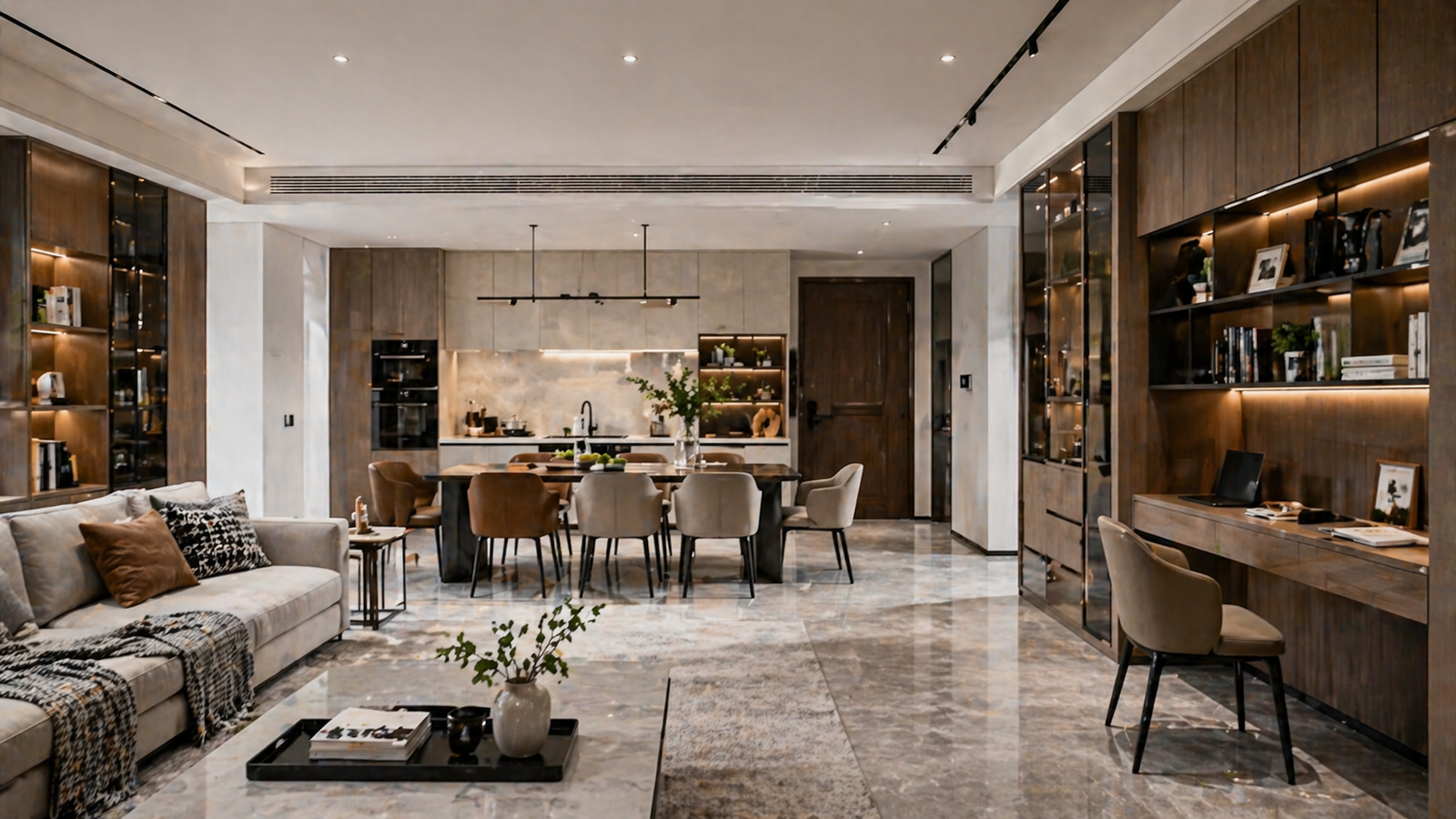
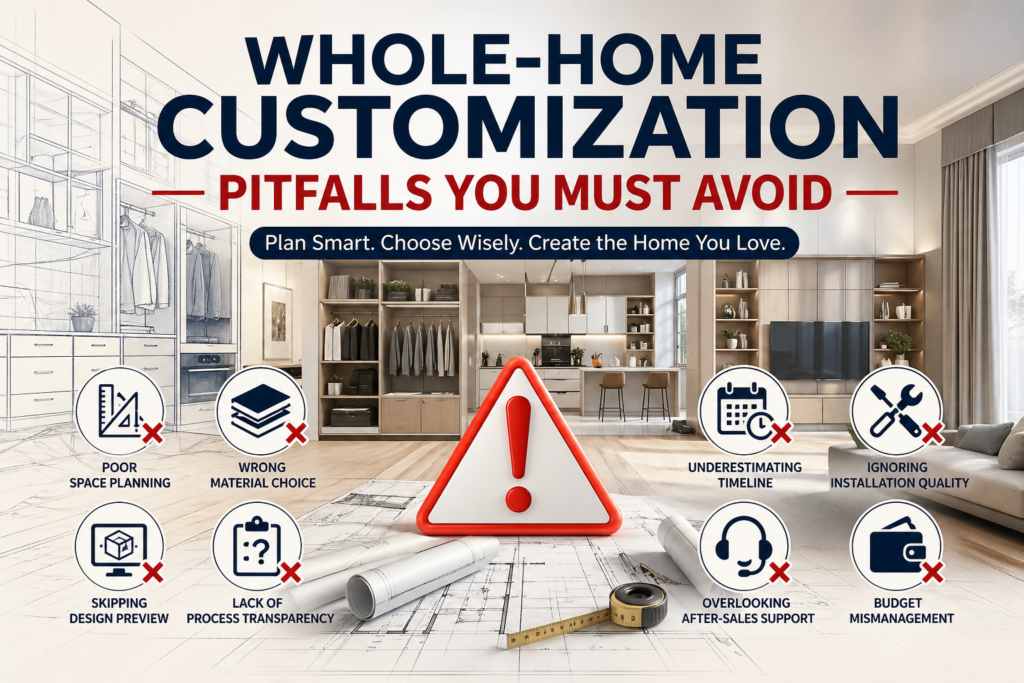
Whole-home customization has become one of the most popular ways to create a personalized, functional, and visually cohesive living space. Instead of buying ready-made furniture, homeowners now prefer tailored solutions that match their lifestyle, storage needs, and aesthetic preferences. However, while the concept sounds ideal, the reality can be full of hidden risks if you’re not properly prepared.
Companies like NANHONGDINGYU, known for delivering end-to-end customization services—from layout planning to installation—highlight how complex this process actually is. A complete project involves design, material selection, production, and after-sales support, all of which must be aligned to achieve a successful result.
This guide will walk you through the most common pitfalls in whole-home customization and show you how to avoid costly mistakes while building a home that truly works for you.
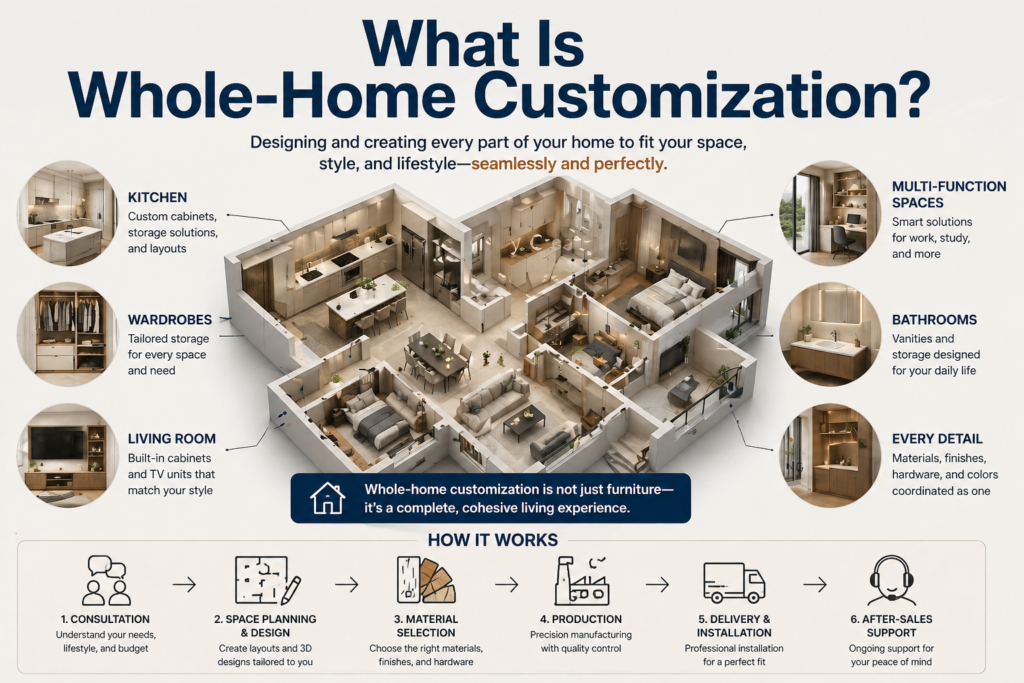
Whole-home customization refers to designing and manufacturing furniture and storage solutions tailored specifically to a home’s layout and the homeowner’s needs. This includes kitchens, wardrobes, living room cabinets, and multi-functional spaces.
Unlike traditional furniture shopping, this process is integrated and highly structured. For example, NANHONGDINGYU follows a workflow that includes consultation, design development, production, installation, and ongoing support to ensure consistency and quality.
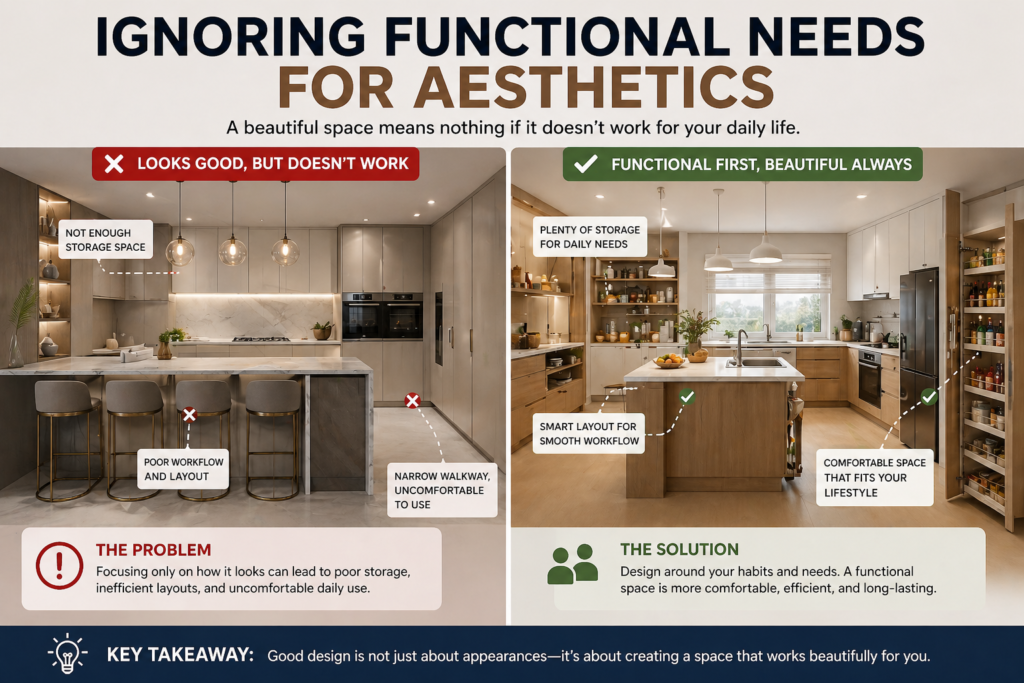
Many homeowners prioritize visual appeal over practicality. While a sleek, modern cabinet system may look impressive, it may fail to meet daily storage or usability needs.
Focus on how you live before how your home looks. A well-designed home should improve daily life, not just serve as decoration. According to NANHONGDINGYU, effective design must align with real living habits and practical usage.
Without proper planning, even expensive custom furniture can lead to cluttered or inefficient spaces.
Work with professionals who prioritize spatial logic. High-quality customization services begin with precise measurements and layout planning to maximize every inch of space.
Material selection affects durability, cost, and long-term maintenance. Many homeowners either overspend on unnecessary premium materials or choose low-quality options that wear out quickly.
Companies like NANHONGDINGYU emphasize material matching and quality inspection during production to ensure durability and consistency.
Some homeowners rush into production without fully understanding the final outcome.
Once production begins, changes become expensive or impossible.
Always insist on:
NANHONGDINGYU follows a “preview first, produce later” approach, ensuring clients approve every detail before manufacturing begins.
A vague or unclear workflow often leads to delays, miscommunication, and unexpected costs.
A reliable provider should offer a structured process:
This kind of step-by-step system ensures clarity and smooth project execution.
Many homeowners expect quick results, but customization projects require coordination between multiple stages.
A full project usually takes 20–45 working days, depending on complexity.
Even perfectly manufactured furniture can fail if installation is poorly executed.
Ensure the same team handles both production and installation. This reduces errors and ensures the final result matches the design.
Many companies disappear after installation, leaving homeowners to deal with issues alone.
NANHONGDINGYU provides long-term after-sales support, including warranties and ongoing maintenance, which is essential for long-term satisfaction.
Customization projects often exceed budgets due to poor planning or hidden costs.
The success of your project depends heavily on the company you choose.
A company like NANHONGDINGYU stands out by integrating design, production, and installation into one cohesive system, ensuring efficiency and consistency throughout the project.
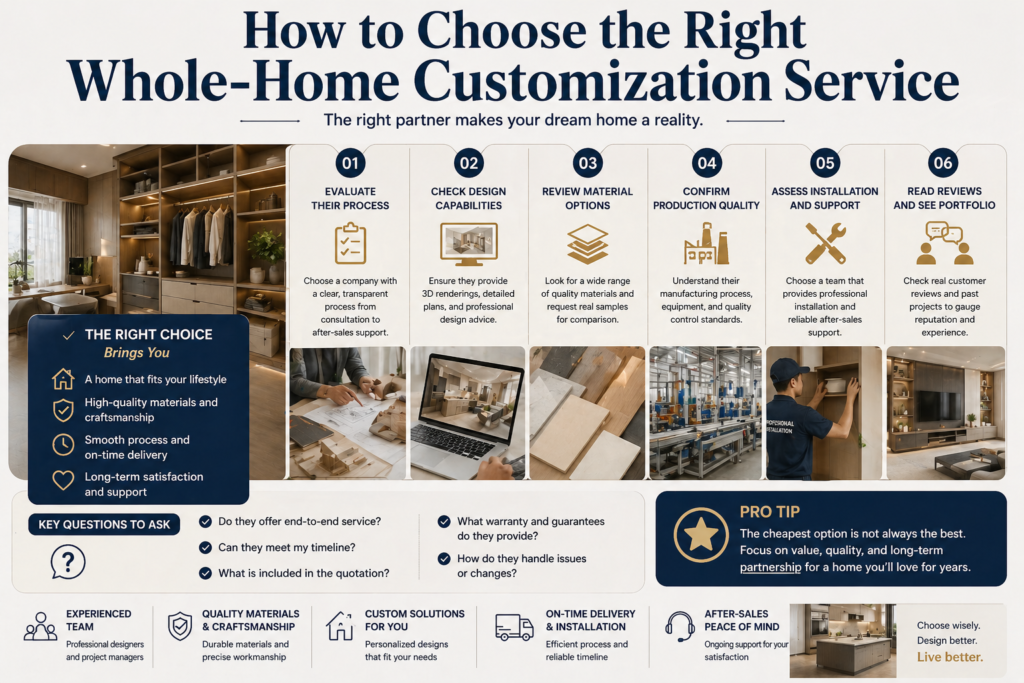
Look for a clear, structured workflow from consultation to after-sales.
Ensure they provide 3D previews and detailed plans.
Ask for samples and explanations.
Understand how materials are processed and inspected.
Choose providers offering full-service solutions.
One of the biggest advantages in whole-home customization is having a single provider manage the entire process. This reduces communication gaps, ensures design consistency, and improves efficiency.
NANHONGDINGYU’s integrated approach—covering planning, design, production, and installation—demonstrates how a unified system can simplify complex projects while delivering better results.
Whole-home customization is not just about furniture—it’s about creating a living environment that reflects your lifestyle, habits, and long-term needs. While the process offers incredible flexibility and personalization, it also comes with risks if not handled properly.
By understanding common pitfalls—such as poor planning, weak material choices, and lack of process transparency—you can make smarter decisions and avoid costly mistakes.
With the right partner, such as NANHONGDINGYU, and a clear understanding of the process, you can transform your home into a space that is not only beautiful but also practical, efficient, and built to last.
A well-designed home doesn’t just look good—it works better for your everyday life.
Whole-home customization is a process where all furniture and storage systems are tailored to fit your home’s layout, style, and lifestyle needs. It typically includes design planning, material selection, production, installation, and after-sales support.
Most whole-home customization projects take between 20 to 45 working days, depending on the size of the space, design complexity, and production requirements.
It can be more expensive upfront, but it offers better space utilization, higher quality, and longer durability, making it a more cost-effective solution in the long run.
You should evaluate their design capabilities, material quality, production process, installation service, and after-sales support. A company offering end-to-end service is usually more reliable.
Focus on functionality over aesthetics, plan your space carefully, review designs before production, choose the right materials, and work with a professional company like NANHONGDINGYU to ensure a smooth and successful project.
 03Jul
03Jul
 04Jul
04Jul
 by
by