Modern story house built from scratchinto comfort and usability
Lorem ipsum dol amet consectetu adipiscing elit, seding doi eiusmod.



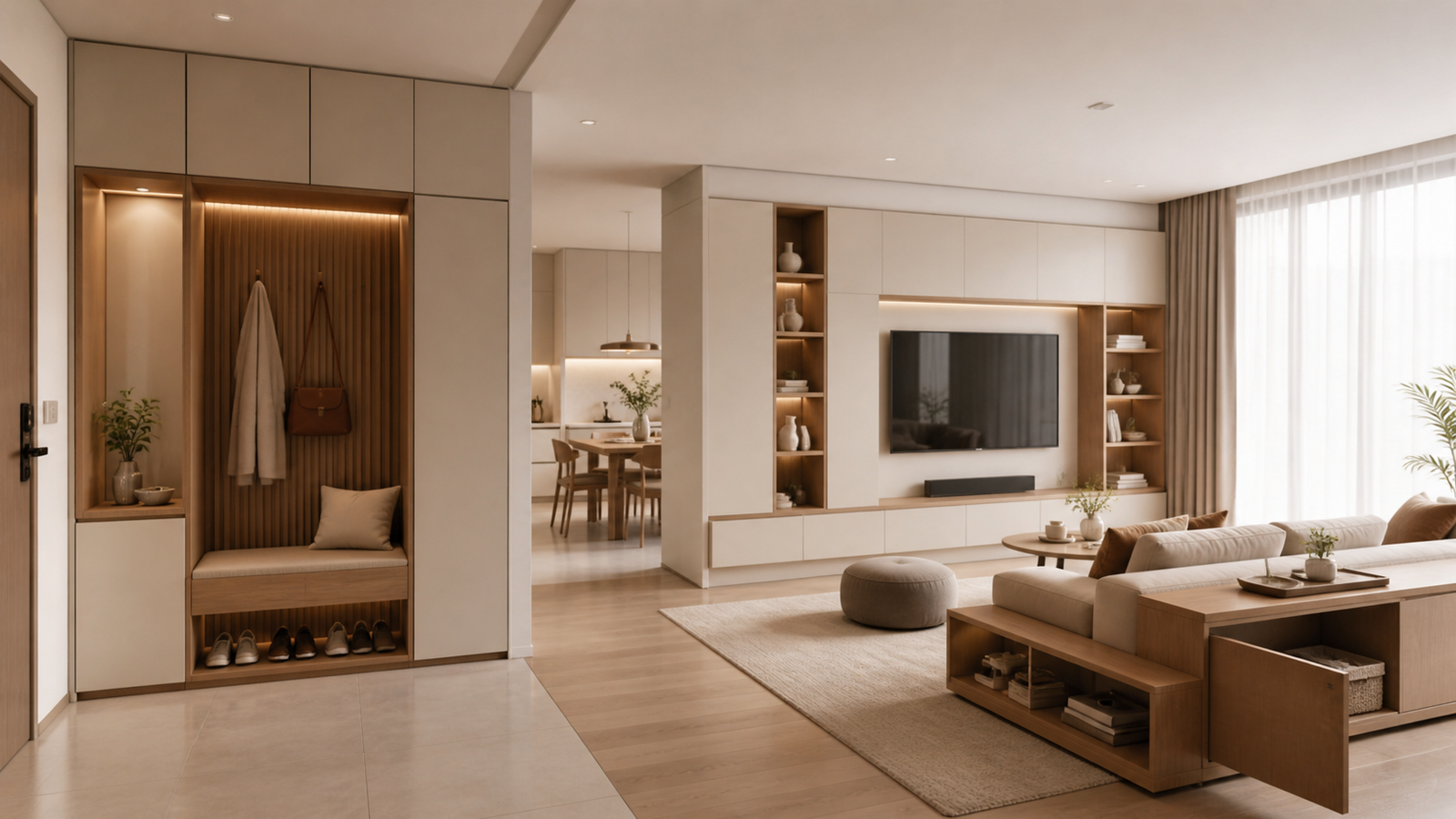
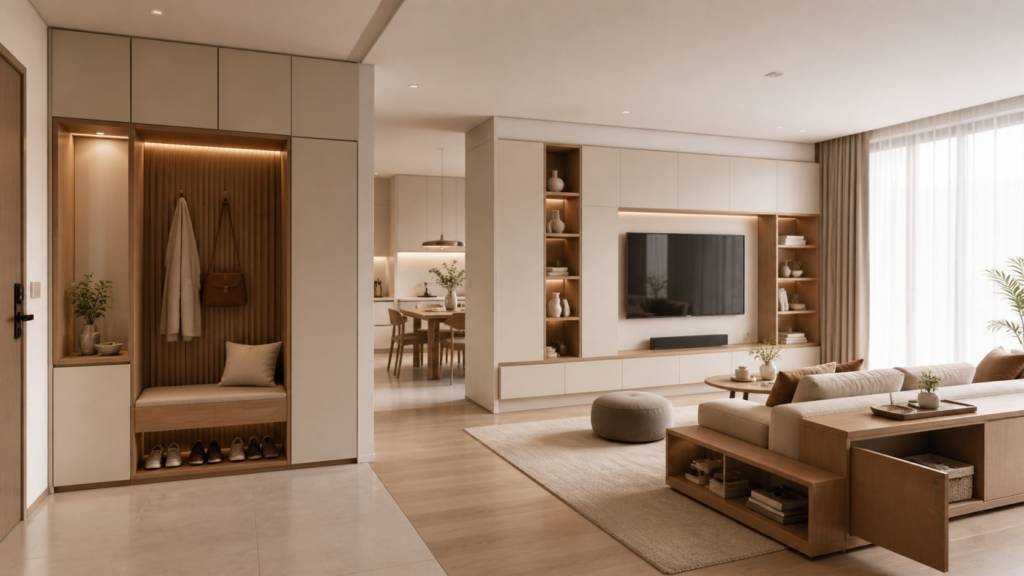
Modern homes are no longer judged only by how beautiful they look. A truly comfortable home must also make daily life easier. This is where the idea of “lazy storage” becomes valuable. Lazy storage does not mean careless living or hiding everything behind closed doors. It means creating a home system that reduces repeated effort, keeps daily items within reach, and makes tidying up feel natural instead of stressful.
For busy families, young professionals, and homeowners who want a cleaner lifestyle without spending hours organizing every week, lazy storage offers a practical design direction. Instead of relying on temporary boxes, random baskets, or last-minute cleaning, the home itself should support better habits. Cabinets, wardrobes, entryway units, kitchen storage, and living room furniture should work together as one organized system.
This idea connects closely with the whole-home customization approach of NANHONGDINGYU. A well-planned custom home does not simply fill empty walls with cabinets. It studies how people move, what they use most often, where clutter appears, and how storage can become part of daily comfort. With smart planning, homeowners can create a space that looks calm, functions smoothly, and stays organized with less effort.
Lazy storage is not about doing less because you do not care. It is about designing better so you do not have to fight your home every day.
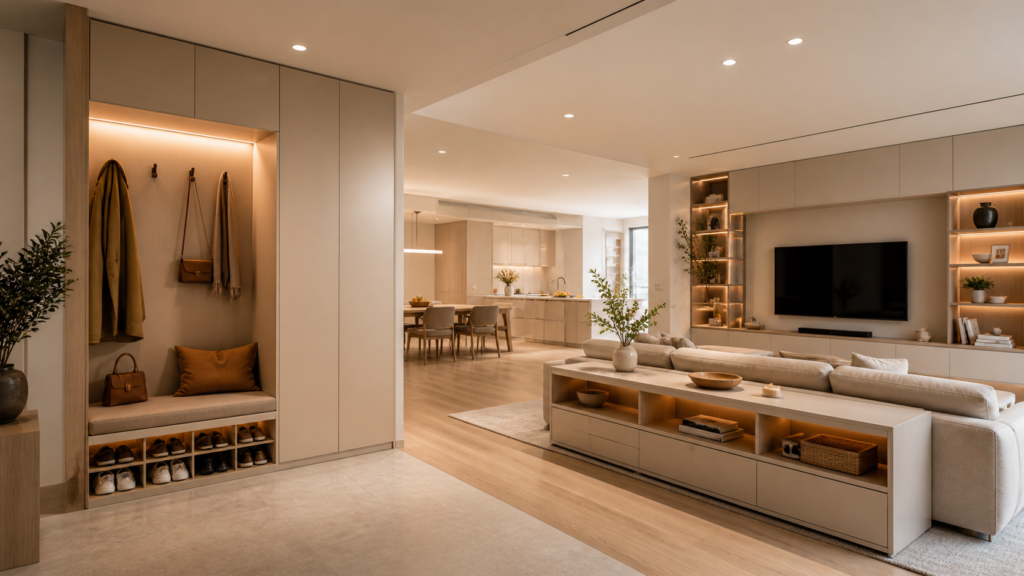
Lazy storage is a design strategy built around convenience, visibility, and low-maintenance organization. The goal is simple: make it easy to put things away and even easier to find them again.
Traditional storage often focuses only on capacity. Homeowners ask, “How many cabinets can we add?” Lazy storage asks a better question: “How can this storage make daily life easier?” A large cabinet is not useful if the items inside are hard to access. A beautiful wardrobe is not successful if clothes pile up on a chair every night. A kitchen pantry is not effective if ingredients disappear into deep shelves and expire before anyone sees them.
Lazy storage solves these problems by organizing the home around real habits. It places everyday items in easy-access areas, seasonal items in higher or deeper spaces, and rarely used belongings in hidden storage zones. It also reduces visual clutter by giving every category a clear home.
The best storage system does not require perfect discipline. It works with human behavior. People naturally drop keys near the door, leave bags in the entryway, keep chargers near the sofa, and place frequently used dishes close to the cooking area. Lazy storage accepts these habits and builds proper solutions around them.
Instead of forcing a family to change completely, good design guides them gently. A drawer near the entrance catches small items. A low cabinet stores shoes. A living room side unit hides remotes and cables. A wardrobe includes dedicated space for daily outfits. These small decisions make the home easier to maintain.
Some people misunderstand lazy storage as simply hiding clutter. That is not the goal. The best lazy storage system improves both appearance and function. It keeps the home visually clean while making daily routines faster.
A home designed this way should feel open, breathable, and calm. Items should not be scattered everywhere, but they also should not be buried so deeply that using them becomes inconvenient.
The modern home carries more functions than ever before. It may serve as a place for family life, remote work, cooking, entertainment, exercise, study, and rest. As these functions increase, clutter becomes harder to control.
Many homes contain more products than previous generations had: small appliances, sports gear, beauty tools, children’s toys, tech accessories, seasonal decorations, cleaning supplies, and home office equipment. Without a proper system, these items spread across every room.
At the same time, people have less patience for complicated organization. After a long day, no one wants to open five boxes just to store one item. Lazy storage reduces that friction. It creates simple, obvious storage points so tidying becomes quick.
Open-plan homes look beautiful, but they also expose clutter easily. In a combined living and dining area, one messy corner can affect the entire space. That is why custom storage matters. Built-in cabinets, wall units, sideboards, and multi-functional furniture help hide daily clutter while keeping the overall design elegant.
In apartments or compact homes, storage mistakes become obvious quickly. A poorly planned wardrobe, unused corner, or awkward entryway can waste valuable space. Lazy storage is especially useful in small homes because it turns walls, corners, vertical height, and transitional areas into practical storage zones.
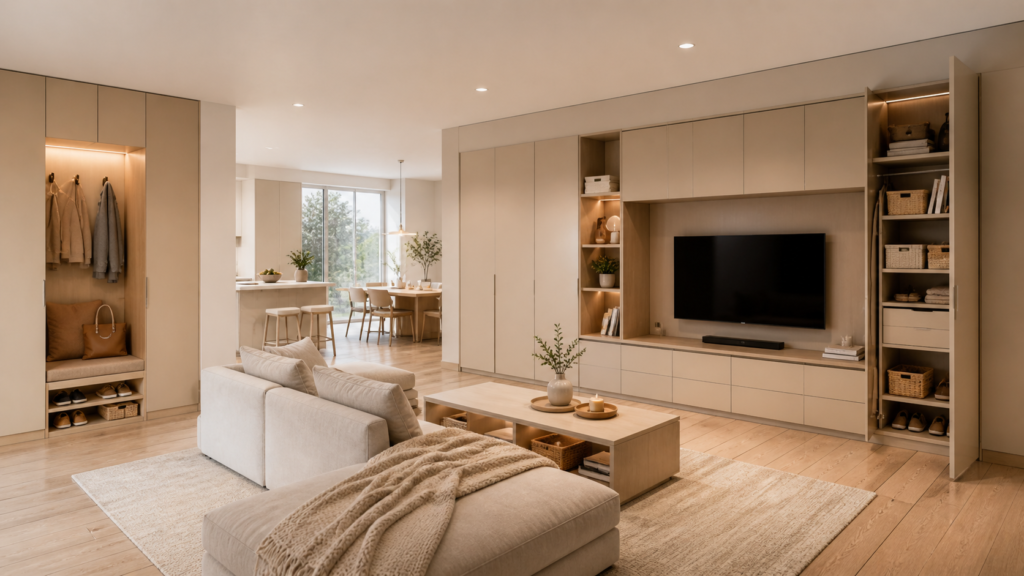
A good lazy storage system follows several key principles. These principles can guide whole-home customization and help homeowners create a more comfortable living environment.
This is the foundation of lazy storage. If an item is used in the kitchen, it should live in the kitchen. If coats, shoes, and bags are used at the entrance, they should have storage near the entrance. If books, remotes, and blankets are used in the living room, the living room should include proper storage for them.
When storage is placed too far away, clutter appears. People usually do not make the extra trip. Good design removes that unnecessary step.
Not every item deserves the same storage position. Daily-use items should be placed at comfortable hand height. Weekly-use items can go slightly higher or lower. Seasonal items can be stored in upper cabinets or deeper compartments.
This hierarchy makes the home easier to use. It also prevents the most active areas from becoming overloaded.
Lazy storage should support a clean visual effect. Closed cabinets, handle-free doors, built-in wardrobes, and full-height storage walls can hide visual noise. This is especially important in living rooms, bedrooms, and entryways where the first impression matters.
A calm home does not need to be empty. It simply needs smart hidden storage.
Open shelves are useful for display and quick access, but too many open shelves create dust and visual clutter. Closed cabinets are cleaner, but too many closed surfaces can feel heavy. The best solution is balance.
Use open shelves for decorative objects, books, plants, or frequently used items that look good. Use closed storage for paperwork, supplies, tools, toys, and anything that creates visual mess.
A home may look perfect in a rendering, but daily use is the real test. Lazy storage must consider movement, family routines, cleaning needs, and long-term durability. A cabinet that looks beautiful but blocks traffic is not a good cabinet. A wardrobe that looks symmetrical but lacks practical compartments is not a good wardrobe.
This is why whole-home planning is important. Each storage decision should connect with lifestyle, not just appearance.
The entryway is one of the most important areas for lazy storage. It is where outdoor items enter the home, and it often becomes the first clutter zone.
A practical entryway should include a drop zone for keys, wallets, sunglasses, mail, and small everyday items. This can be a shallow drawer, a narrow shelf, or a small cabinet surface. Without a drop zone, these items usually end up on the dining table or sofa.
Shoes, umbrellas, coats, and delivery packages carry dust and outdoor mess. A customized entryway cabinet can separate these items from the rest of the home. Shoe cabinets, coat hooks, closed compartments, and lower storage benches all help create a smoother routine.
A built-in bench makes changing shoes easier. It also gives the entryway a more complete and welcoming feeling. Storage under the bench can hold slippers, shoe care products, or daily footwear.
Many entryways are narrow, but vertical storage can increase capacity without taking up too much floor space. Tall cabinets, overhead compartments, and slim side units can store seasonal shoes, bags, or household supplies.
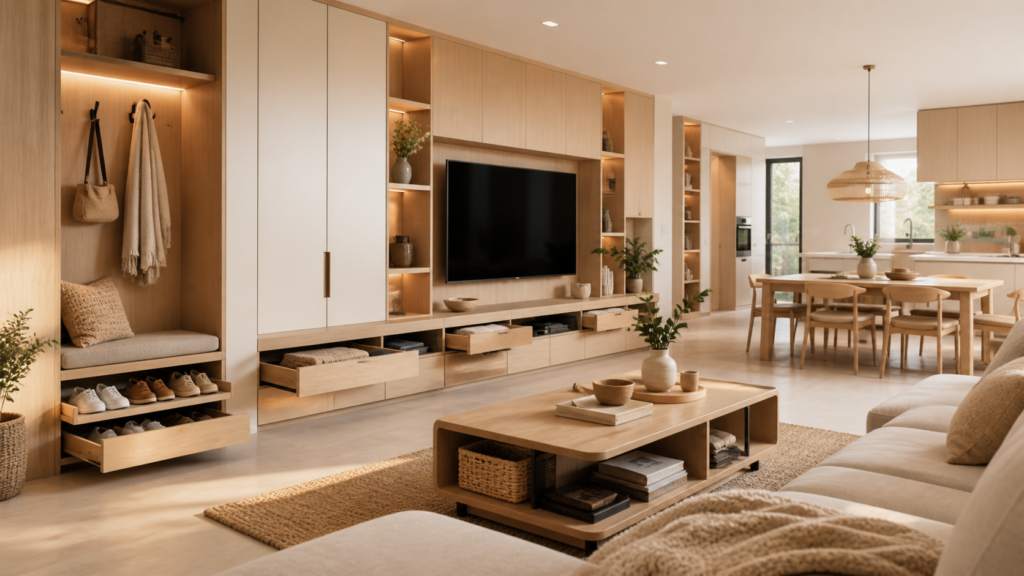
The living room needs to balance display, comfort, and storage. It is where families relax, receive guests, watch TV, and often store many small items.
A customized TV wall can do more than hold a screen. It can include hidden cabinets for electronics, drawers for remote controls, shelves for books, and display areas for decor. This keeps the living room clean without sacrificing function.
Cables are one of the biggest enemies of a clean living room. A smart cabinet system should include cable management, device compartments, and ventilation for electronics. When these details are planned early, the final space looks much more polished.
Blankets, games, books, and children’s toys can be stored in low cabinets or drawers. Low storage is easy to reach and easy to maintain. For families with children, this also encourages kids to put items away by themselves.
Open display shelves can make the living room feel personal, but they should be limited and intentional. Too many decorative objects make cleaning harder. Lazy storage works best when display is curated and closed storage handles the rest.
A bedroom should feel restful. However, poor wardrobe planning can quickly turn it into a cluttered space. Clothes, bags, accessories, bedding, and personal items all need proper storage.
A smart wardrobe should match the user’s clothing habits. If someone wears more hanging clothes, the wardrobe needs more hanging space. If they own many folded items, drawers and shelves matter more. If they use accessories often, small compartments should be easy to access.
Lazy storage means the wardrobe should support fast decisions in the morning.
One useful lazy storage idea is a current-week clothing zone. This can be a small hanging section, open shelf, or dedicated drawer for outfits planned for the week. It reduces morning stress and prevents clothes from piling up on chairs.
Socks, underwear, belts, scarves, and accessories become messy when stored on open shelves. Drawers with dividers keep small items organized and easy to find. This is a simple but powerful upgrade.
Seasonal bedding, winter coats, and rarely used luggage can go in upper cabinets. This keeps active storage areas free for daily items. Full-height wardrobes are especially useful because they use vertical space efficiently.
The kitchen may benefit from lazy storage more than any other room. Cooking already takes time and energy. A poorly organized kitchen makes every meal harder.
Kitchen storage should follow the cooking process: preparation, cooking, serving, cleaning, and storage. Cutting boards, knives, spices, pans, dishes, and cleaning supplies should each be placed close to where they are used.
When the kitchen follows a logical flow, cooking becomes faster and less tiring.
Deep cabinets often waste space because items at the back become hard to reach. Pull-out baskets, drawers, and corner systems make storage more visible. This is a perfect lazy storage solution because it reduces bending, searching, and rearranging.
A clean countertop makes the kitchen feel larger and more hygienic. Small appliances should have dedicated storage or appliance garages when possible. Frequently used appliances can stay accessible, while occasional-use items should be hidden.
Dining areas often need storage for tableware, napkins, drinks, snacks, and serving items. A custom sideboard or dining cabinet keeps these items close to the table. This reduces trips to the kitchen and makes hosting easier.
Modern homes often include spaces that serve more than one purpose. A guest room may also work as a study. A balcony may serve as a laundry area. A hallway may become hidden storage. Lazy storage makes these flexible spaces easier to manage.
For a home office area, storage should include documents, chargers, office supplies, and devices. Closed cabinets keep work items hidden after office hours, helping the home feel restful again.
Wall-mounted cabinets and full-height storage systems are useful in multi-functional rooms. They keep the floor open while adding capacity. This is especially helpful in small apartments.
A bench can include storage. A desk can connect with shelving. A bed can include drawers. A wall cabinet can include a fold-down table. Multi-functional furniture supports lazy storage because it reduces the need for separate pieces.
Store-bought furniture can help, but it often leaves gaps. It may not match the exact wall size, ceiling height, lifestyle, or storage needs of the homeowner. Custom furniture solves these problems more precisely.
Custom cabinets can fit corners, wall widths, ceiling heights, and unusual layouts. This prevents wasted space and creates a cleaner built-in look.
Every family stores things differently. A young couple, a family with children, and a homeowner who loves cooking all need different storage systems. Customization allows the design to match real behavior.
Whole-home customization also creates a consistent design language. Materials, colors, cabinet lines, handles, and proportions can connect across the entryway, living room, bedroom, kitchen, and dining area. This makes the home feel more unified and premium.
NANHONGDINGYU can be naturally connected with the lazy storage concept because whole-home customization is not only about furniture production. It is about creating a complete living system.
A successful storage system begins before production. It starts with understanding the home layout, measuring the space, discussing lifestyle needs, and identifying storage pain points. After that, the design can move into cabinet planning, material selection, visual presentation, manufacturing, delivery, and installation.
This full-process approach helps homeowners avoid random decisions. Instead of buying one cabinet at a time, they can create a connected storage plan for the whole home.
One major advantage of a professional customization process is the ability to preview the design before production. When homeowners can see the planned layout, cabinet structure, and visual effect in advance, they can make better decisions. This reduces uncertainty and helps ensure that the final storage system matches expectations.
The best storage design should not only look good on the first day. It should continue to support daily life for years. NANHONGDINGYU’s whole-home custom approach can help homeowners think through how each space will be used, what needs to be stored, and how the design can reduce future clutter.
Lazy storage sounds simple, but several mistakes can weaken the final result.
More cabinets do not always mean a better home. If storage is placed in the wrong area, it may still feel inconvenient. The goal is not only capacity. The goal is useful capacity.
Before designing storage, homeowners should think about categories: shoes, coats, bags, cleaning tools, documents, toys, bedding, cookware, small appliances, and seasonal items. Each category needs a clear position.
Open shelves look light and stylish, but they require regular cleaning and careful arrangement. For lazy storage, closed cabinets are often more practical.
A home changes over time. Families grow, hobbies change, and storage needs increase. A good design should leave some flexible space for future use.
A strong entryway storage system should include shoe storage, a small item drawer, coat space, umbrella storage, a bench, and hidden compartments for seasonal items. This keeps outdoor clutter from entering the rest of the home.
A practical living room should include TV wall storage, cable management, low drawers, closed cabinets, limited open display shelves, and space for books, toys, blankets, or entertainment devices.
A well-designed bedroom should include hanging zones, drawers, folded clothing shelves, accessory storage, bedding storage, and upper cabinets for seasonal items.
An efficient kitchen should include drawer storage, pull-out systems, spice zones, appliance storage, dish storage, cleaning supply storage, and countertop management.
A functional dining space should include sideboard storage, tableware compartments, drink storage, snack storage, and serving item storage.
Lazy storage is not a passing trend. It reflects how people truly want to live. Homeowners want beautiful interiors, but they also want fewer chores, less clutter, faster routines, and spaces that support everyday comfort.
A smart home is not only filled with technology. It is also planned with empathy. It understands where people drop their keys, where children leave toys, where clothes pile up, and where kitchen tools become hard to reach. Then it turns those daily problems into thoughtful storage solutions.
With whole-home customization, lazy storage becomes easier to achieve. Instead of forcing standard furniture into a unique home, homeowners can design cabinets, wardrobes, entryway systems, kitchen storage, and living room units around their actual lifestyle.
NANHONGDINGYU brings this idea into a complete home solution. Through layout planning, custom furniture design, material coordination, production, installation, and after-sales support, the company helps homeowners create spaces that feel organized, comfortable, and easier to maintain.
In the end, lazy storage is not about being lazy. It is about living smarter. It is about building a home that works with you, not against you. A well-designed storage system saves time, reduces stress, and allows the beauty of the home to last beyond the first day. For modern families, that may be the most valuable kind of design.
 03Jul
03Jul
 04Jul
04Jul
 by
by