Modern story house built from scratchinto comfort and usability
Lorem ipsum dol amet consectetu adipiscing elit, seding doi eiusmod.



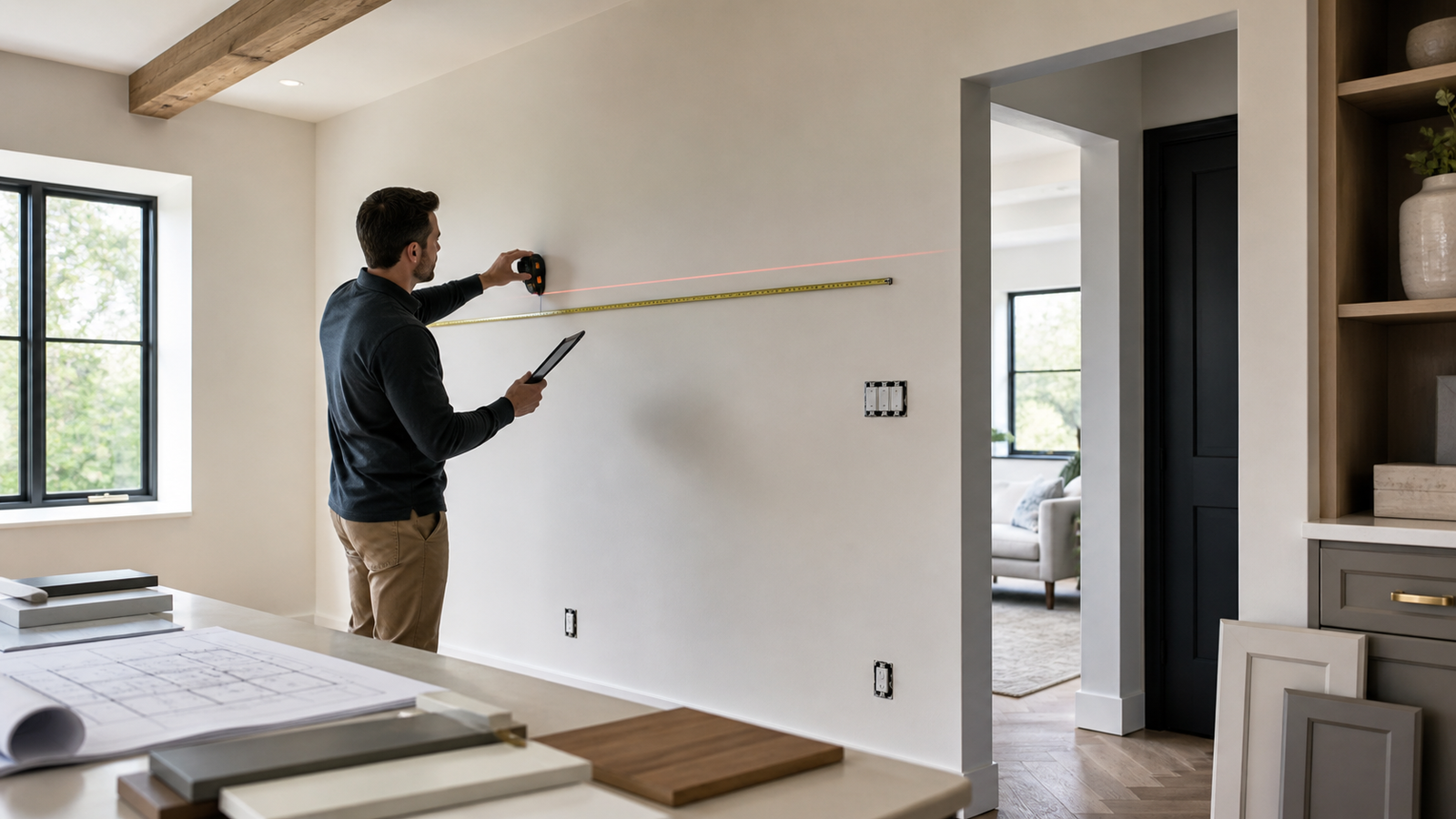
In whole-home customization, measurement is not a small technical step. It is the foundation of every cabinet, wardrobe, storage wall, entryway unit, kitchen system, and multi-functional space. A beautiful design can only become a practical home solution when the dimensions are accurate, the site conditions are clearly understood, and every detail has been checked before production begins.
For a custom interior project, even a small measurement mistake can affect the final result. A cabinet may not fit the wall properly. A wardrobe door may conflict with a light switch. A kitchen storage system may block a socket, pipe, or appliance opening. A ceiling beam may reduce the available height. A wall may look straight in photos but actually lean slightly in real space. These problems are not always obvious during the early design stage, but they can create delays, extra costs, and installation stress later.
This is why measurement matters so much for companies that provide whole-home custom furniture solutions. NANHONGDINGYU presents itself as a whole-home customization provider that supports clients through layout planning, material selection, design development, manufacturing, delivery, installation, and after-sales service. Its process also starts with consultation and measurement before moving into design development, production, quality check, delivery, and installation.
This article explains the key measurement precautions homeowners, designers, and project managers should consider before starting a custom home interior project. It focuses on practical measurement awareness, site preparation, common mistakes, and the details that help a project move smoothly from concept to installation.
Measurement is more than recording length, width, and height. In custom home interiors, measurement connects the real space with the design plan. It helps the design team understand what can be built, where it can be installed, how people will use the space, and what limits must be respected.
A design drawing may look balanced on screen, but the real home has many physical conditions that can affect the final layout. Walls may not be perfectly vertical. Floors may not be level. Door frames, window trims, air-conditioning units, pipes, outlets, and ceiling beams can all change how a cabinet or wardrobe should be designed.
Professional measurement helps turn a design idea into a buildable plan. It gives the designer enough information to create accurate drawings and helps the factory produce panels, doors, and hardware components that match the site.
Custom furniture usually depends on precise production. Once panels are cut and hardware positions are prepared, major changes become difficult. If the measurement is wrong, the installation team may need to trim, modify, remake, or delay parts of the project.
Accurate measurement reduces these risks. It allows the design team to confirm dimensions before production and helps the installation team work with fewer unexpected problems on site.
Good measurement also affects comfort. For example, a wardrobe must have enough depth for clothing. A kitchen cabinet must match appliance dimensions. A desk area must leave enough legroom. A hallway storage cabinet must not make the passage feel narrow. These details shape how people actually live in the home every day.
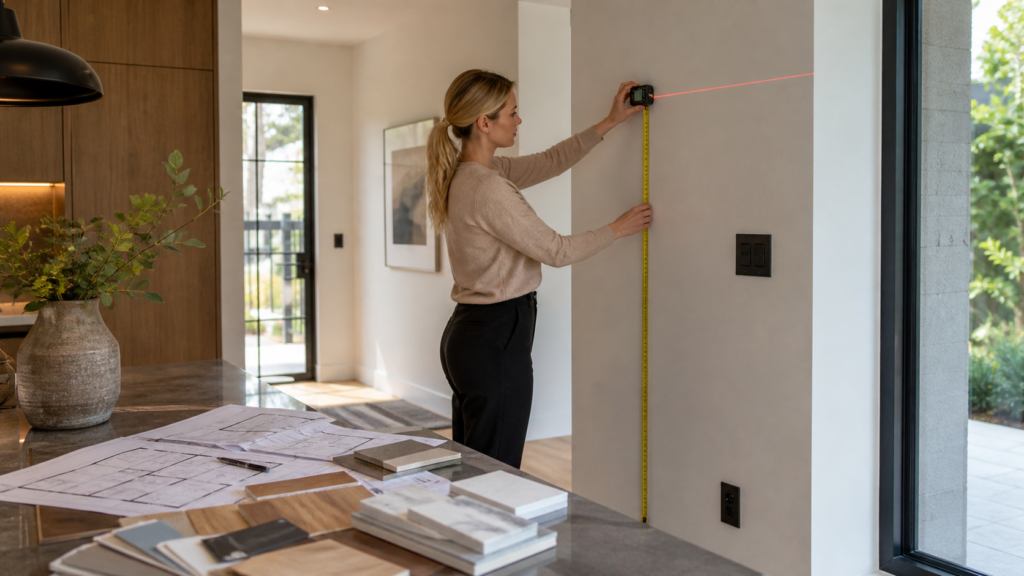
Before measuring a home for custom interiors, the site should be prepared as much as possible. Measurement taken too early or under unclear conditions may not reflect the final space.
The best time to take final measurements is usually after major construction work has become stable. Wall surfaces, flooring, ceiling work, tiles, and utility positions can all affect final dimensions. If measurement happens before these elements are completed, the numbers may change later.
However, early measurement can still be useful for preliminary planning. The important point is to separate rough measurement from final measurement. Rough measurement helps estimate layout and budget. Final measurement should guide production.
Rooms should be accessible before the measurement visit. Large objects, construction materials, packaging, or temporary furniture can block walls and corners. If the measuring person cannot reach the actual surface, the result may be less accurate.
For wardrobes, cabinets, TV walls, kitchen systems, and entryway storage, every side of the installation area should be visible. Corners, ceiling lines, flooring edges, and wall surfaces should be easy to inspect.
If the homeowner has floor plans, renovation drawings, electrical plans, plumbing plans, or appliance specifications, these documents should be available during measurement. They help the designer compare site conditions with planned layouts.
Even when drawings exist, the actual site must still be measured. Construction changes and real-world differences are common. Drawings are helpful references, but they should not replace on-site verification.
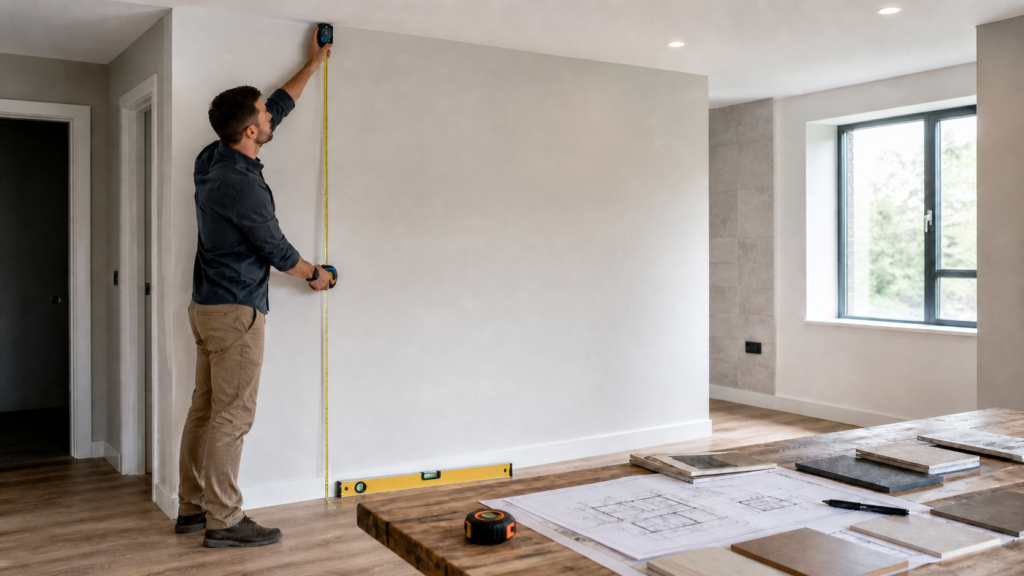
The three basic surfaces—walls, floors, and ceilings—strongly affect custom furniture installation. Each one should be checked carefully.
Wall dimensions should be measured at more than one point. A wall may have different lengths near the floor, at mid-height, and near the ceiling. This is especially important for built-in cabinets and wall-to-wall storage systems.
For height, measure from the finished floor to the ceiling at multiple positions. Do not assume the height is the same across the entire room. Slight differences may affect top panels, filler strips, and cabinet alignment.
A wall can look straight but still be uneven. If a custom cabinet is installed against an uneven wall, gaps may appear. These gaps may need filler panels or adjustment during installation.
Before production, the design team should know whether the wall is straight enough for a tight fit. If not, the plan should include reasonable allowances and finishing solutions.
Floor level matters for wardrobes, kitchen cabinets, sideboards, and tall storage units. If the floor slopes, cabinet doors may not align properly. Drawers may not operate smoothly. Tall units may also look tilted.
A professional measurement process should consider whether leveling feet, base adjustments, or installation corrections are needed.
Ceilings may include beams, air vents, recessed lighting, sprinkler systems, curtain boxes, or decorative structures. These elements must be recorded clearly.
For floor-to-ceiling cabinets, ceiling details are especially important. A cabinet that ignores a beam or ceiling drop may not fit. A wardrobe that touches the ceiling too tightly may also be difficult to install.
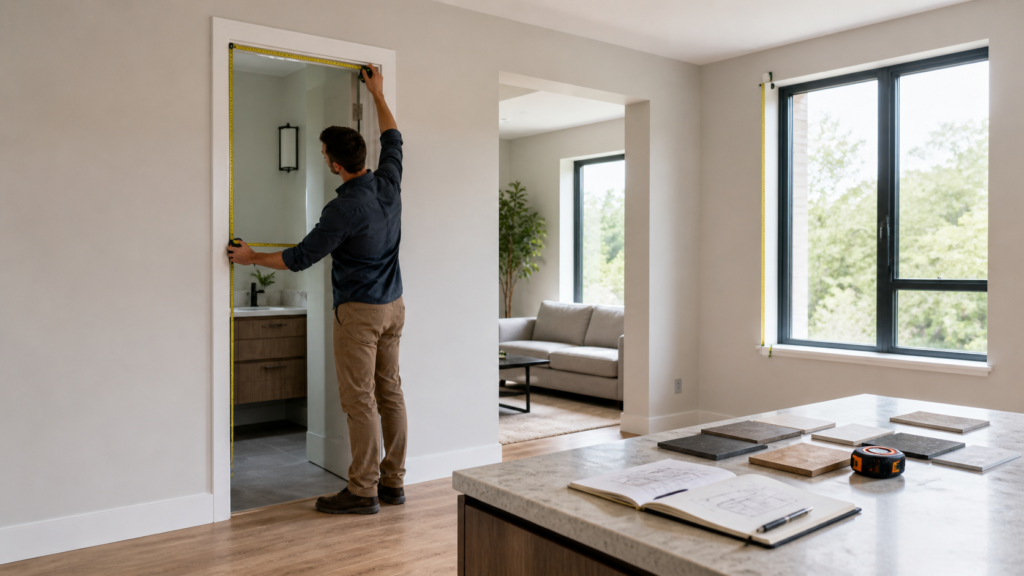
Openings affect layout, storage planning, lighting, movement, and furniture operation. They should be measured with care.
Measure the door opening width, height, frame thickness, and distance from nearby walls. Also record the direction the door opens. A cabinet door, drawer, or wardrobe panel should not conflict with the room door.
Sliding doors, folding doors, and hidden doors require special attention because their tracks, panels, and handles may occupy extra space.
Windows affect cabinet height, desk placement, storage layout, and natural light. Measure the full window opening, the frame, the sill height, and the distance from the window to adjacent walls.
If a cabinet is planned below a window, the sill height is critical. If tall storage is planned near a window, the design should avoid blocking light or making the room feel heavy.
For entryways, hallways, bedrooms, and living rooms, passage width must be measured and protected. A storage cabinet may look useful, but if it makes circulation uncomfortable, the design will not work well in daily life.
A good custom design balances storage capacity with movement. Measurement should help the designer understand how much depth is reasonable.
Custom cabinets often interact with sockets, switches, pipes, drains, vents, and appliances. These details must be included in the measurement record.
Record the position of every outlet and switch near the planned furniture area. Measure their height from the floor and distance from nearby walls. Also note whether they need to remain visible, be relocated, or be integrated into the cabinet design.
Ignoring outlet positions is a common mistake. A beautiful cabinet should not block essential power access. For desks, TV walls, kitchen counters, and bedside areas, outlet planning is especially important.
For kitchen, laundry, bathroom storage, and utility areas, plumbing positions must be measured accurately. Water supply points, drain locations, valves, and pipe routes can affect cabinet structure.
If a sink cabinet or appliance cabinet is involved, the design must allow enough space for plumbing access and future maintenance.
Air-conditioning outlets, return vents, heating units, and ventilation openings should not be blocked. Built-in furniture must respect airflow and maintenance needs.
If a cabinet is placed near an HVAC unit, the design may need ventilation openings, access panels, or adjusted spacing.
Appliances should be measured by actual product specifications, not guesses. Refrigerators, ovens, dishwashers, washing machines, dryers, and small built-in appliances all require correct width, height, depth, ventilation clearance, and door-opening space.
A custom cabinet should not only fit around an appliance; it should also allow the appliance to function properly.
Different spaces have different measurement priorities. Whole-home customization requires a detailed approach for each room.
The living room often includes TV walls, display cabinets, sideboards, bookshelves, and multi-functional storage. Measurement should include wall size, TV position, outlet locations, sofa distance, passage width, and ceiling features.
For a TV wall, record the centerline of the TV, outlet positions, cable access points, and the desired viewing height. If the design includes floating cabinets or wall-mounted panels, wall strength may also need to be considered.
Living room cabinets should not overpower the space. Measurement should help determine proper depth, height, and visual proportion. A deep cabinet may provide storage, but it may also make the room feel smaller.
Wardrobes require some of the most precise measurements in the home. Record the wall width, ceiling height, floor level, nearby outlets, window positions, door swing, and available walking space.
Depth is critical. A wardrobe that is too shallow may not hold clothing properly. A wardrobe that is too deep may reduce bedroom comfort. Measurement should confirm the available depth while maintaining enough passage space.
Swing doors, sliding doors, and folding doors all require different clearances. The measurement record should show whether the room has enough space for the chosen door type.
Kitchen measurement must be extremely detailed because cabinetry, appliances, plumbing, electrical work, and cooking flow are closely connected.
Measure finished floor height, wall length, ceiling height, window sill height, and appliance areas. The design should support comfortable cooking, cleaning, and storage.
Refrigerator space, oven openings, sink position, gas or electric cooktop location, dishwasher placement, and ventilation points should all be confirmed before production. Missing one of these details can create serious installation problems.
Entryways often require shoe cabinets, seating benches, hooks, mirrors, and storage for small daily items. Measure passage width carefully because this area must stay easy to move through.
Different shoe types may require different storage depth. The design should match the household’s real habits, not only the visual layout.
Entryway doors, cabinet doors, drawers, benches, and walking paths should all work together. Measurement should confirm that daily movement remains comfortable.
Measurement mistakes often happen because people focus only on the obvious dimensions and forget site conditions.
A single number is rarely enough for custom furniture. Walls, floors, and ceilings may vary. Measure several points and use the smallest or most realistic dimension when planning built-in units.
Tiles, flooring, wall panels, baseboards, and ceiling finishes can change dimensions. If measurement happens before these materials are installed, final measurements should be taken again.
A cabinet may fit into the space but still fail in use if doors or drawers cannot open fully. Always measure the operation area, not just the installation area.
Valves, outlets, network ports, electrical panels, and HVAC access points should remain usable. A custom interior should look clean, but it should not make future maintenance difficult.
Photos are useful for communication, but they cannot replace measurement. Camera angles can distort space, hide uneven surfaces, and miss small obstacles. Photos should support the measurement record, not become the only reference.
A professional measurement process gives the designer more than numbers. It provides context. It shows how the home is built, how people move through the rooms, and where design risks may appear.
With accurate dimensions, the designer can plan storage more intelligently. Cabinets can align with walls, openings, and furniture. The design can also avoid awkward gaps, blocked switches, or uncomfortable movement areas.
NANHONGDINGYU’s website highlights 3D visual preview as part of its service process, allowing clients to see the design before production. Accurate measurement makes this preview more meaningful because the visual plan is based on real site conditions.
Factory production depends on confirmed drawings. When measurement is complete and accurate, production can move forward with fewer uncertainties. Panels, doors, hardware, and accessories can be prepared according to the approved plan.
Installation becomes smoother when the production drawings match the site. Installers can work more efficiently, and homeowners experience less disruption. A well-measured project is easier to deliver on schedule.
Before confirming a custom interior project, use a clear checklist to reduce mistakes.
Record room name, wall length, wall height, ceiling height, floor condition, and major structural features. Include beams, columns, corners, slopes, and uneven surfaces.
Record door openings, window positions, passage width, door swing direction, and furniture movement paths. Make sure cabinets, drawers, and appliance doors can open comfortably.
Record outlets, switches, plumbing points, drains, valves, vents, lighting positions, network ports, and electrical panels. Note which items must remain accessible.
Record appliance models, dimensions, clearance needs, and door-opening directions. Also consider existing furniture that will stay in the room.
Before production, confirm all dimensions, drawings, materials, colors, hardware, and functional details. The goal is to make sure the homeowner, designer, factory, and installation team are working from the same approved information.
Good measurement also depends on good communication. Homeowners should share lifestyle needs, storage habits, budget expectations, and design preferences during the measurement stage.
A designer needs to know how the space will be used. For example, a family with many shoes needs a different entryway cabinet than someone who wants a minimal display area. A person who cooks often needs different kitchen storage than someone who mainly uses small appliances.
Future appliances, furniture purchases, room changes, or family needs may affect the design. If the homeowner plans to buy a larger refrigerator, add a desk, install a projector, or change flooring, the measurement and design plan should consider that early.
Once production begins, changes become more difficult. Homeowners should review drawings carefully and ask questions before approving the final plan. This is especially important for cabinet height, drawer layout, door direction, outlet access, and material choices.
Accurate measurement is one of the most important steps in whole-home customization. It protects the design, supports factory production, reduces installation risk, and improves the final living experience. A custom interior project should never depend on guesses, rough estimates, or unclear site information.
For homeowners, the best approach is to prepare the space, provide available drawings, communicate real lifestyle needs, and confirm every detail before production. For design and production teams, the responsibility is to measure carefully, record site conditions clearly, and turn those details into a practical, beautiful, and buildable plan.
NANHONGDINGYU’s whole-home customization process places measurement at the beginning of the project, followed by design development, production, delivery, installation, and after-sales support. This structured approach reflects a key truth in custom interiors: when measurement is done well, every later step becomes easier, clearer, and more reliable.
Accurate measurements help custom cabinets, wardrobes, and storage systems fit the real space properly. They also reduce installation delays, material waste, and design mistakes.
You should measure wall length, ceiling height, floor level, door openings, window positions, outlets, switches, pipes, vents, and appliance spaces.
Final measurements should be taken after major construction work is complete, including flooring, wall finishes, ceiling work, and utility placement.
A floor plan is helpful, but it should not replace on-site measurement. Real spaces may differ from drawings because of construction changes or uneven walls and floors.
Common mistakes include measuring only one point, ignoring wall unevenness, forgetting door clearance, blocking outlets, and failing to account for finished materials.
Measurement helps designers create practical layouts, plan storage correctly, avoid conflicts with doors or utilities, and make production and installation smoother.
 03Jul
03Jul
 04Jul
04Jul
 by
by