Modern story house built from scratchinto comfort and usability
Lorem ipsum dol amet consectetu adipiscing elit, seding doi eiusmod.



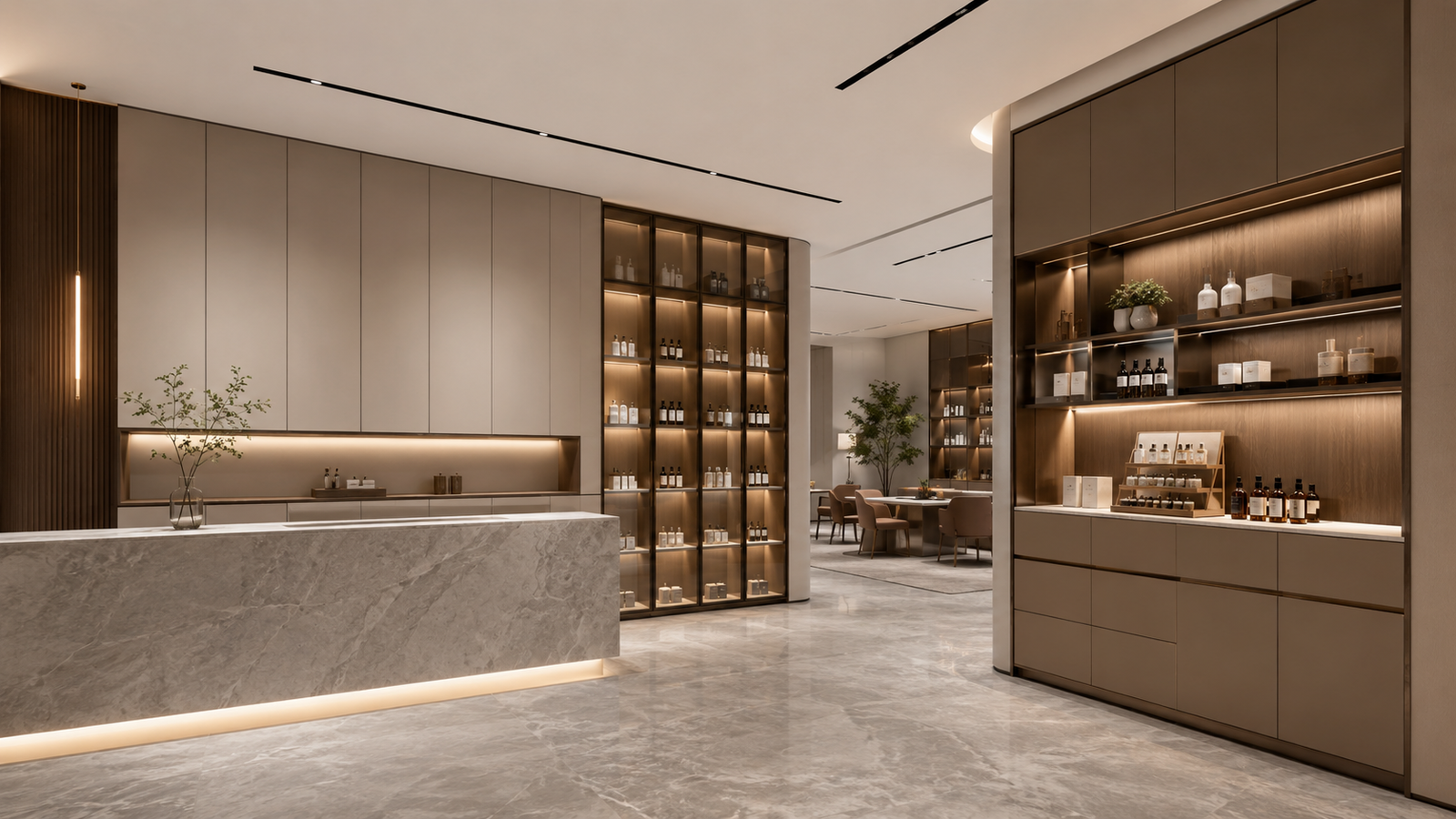
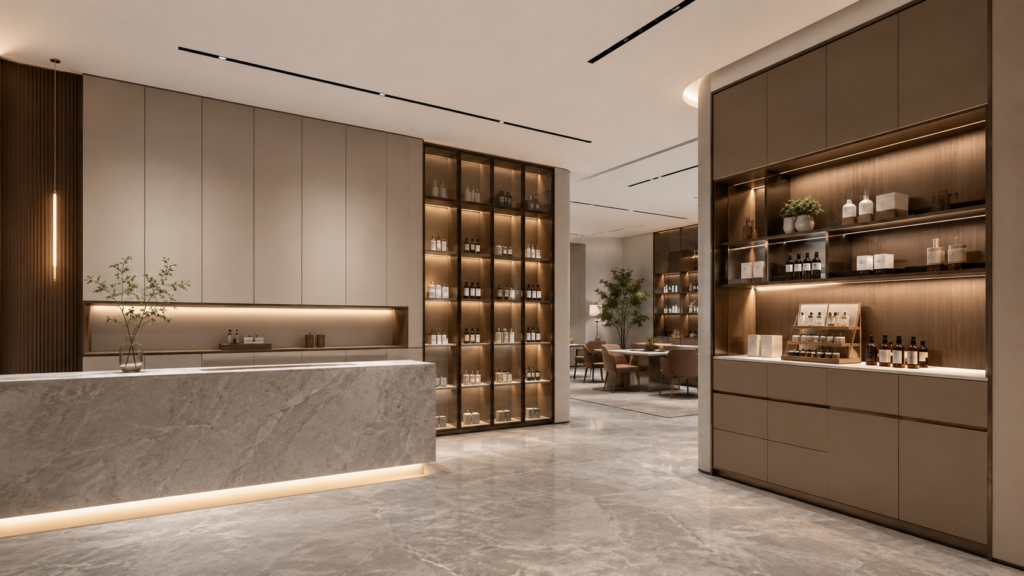
Italian-style commercial cabinetry is more than a storage solution. It is a design language that combines clean structure, refined materials, practical function, and a strong sense of visual order. For businesses, studios, offices, hospitality spaces, retail stores, and high-end residential projects, cabinetry often becomes one of the most important parts of the interior experience. It shapes how people move through a space, how products are displayed, how tools are stored, and how the brand atmosphere is remembered.
For a company like NANHONGDINGYU, this topic connects naturally with whole-home and custom interior solutions. The brand focuses on space planning, cabinet design, material matching, factory production, installation, and after-sales support, which gives it a complete service foundation for customized cabinetry projects.
Italian-style commercial cabinetry refers to custom cabinet systems inspired by Italian interior design principles. It usually emphasizes proportion, simplicity, material texture, hidden storage, smooth surfaces, and elegant detailing. Unlike overly decorative cabinetry, this style focuses on balance. It does not try to fill a room with visual noise. Instead, it uses clean lines, precise layouts, and thoughtful material combinations to create a polished and functional space.
In commercial environments, this style can be used in reception counters, display cabinets, office storage walls, boutique shelving, showroom systems, restaurant service areas, beauty salon storage, hotel wardrobes, studio cabinets, and multi-functional work areas. The goal is not only to make the space look beautiful, but also to make daily operations easier.
A commercial space must communicate trust quickly. When a customer enters a showroom, clinic, office, or boutique, the cabinetry often becomes part of the first impression. Italian-style cabinetry uses straight lines, slim profiles, and balanced proportions to make the space feel organized and premium.
This is especially important for businesses that want a high-end but not overly flashy look. A clean cabinet wall, a floating display unit, or a well-planned reception cabinet can immediately make the environment feel more professional.
Italian-style cabinetry is often quiet and restrained. This allows the brand, products, lighting, and customer experience to become the focus. For example, in a jewelry store, a cabinet should not compete with the jewelry. In a design studio, storage should support creativity without making the room feel crowded. In a retail showroom, display systems should guide attention toward the products.
This is one reason Italian-style commercial cabinetry works so well: it creates a strong background that supports the business instead of overpowering it.
Italian-inspired cabinetry often uses materials such as matte panels, wood veneer, stone-look surfaces, glass, metal trim, soft-touch finishes, and subtle lighting. These materials create depth, but they do not need heavy ornamentation. A single wall cabinet can feel luxurious simply through proportion, texture, and lighting.
For commercial interiors, this matters because the space must remain durable and easy to maintain. A refined material palette can make the project feel upscale while still being practical for everyday use.
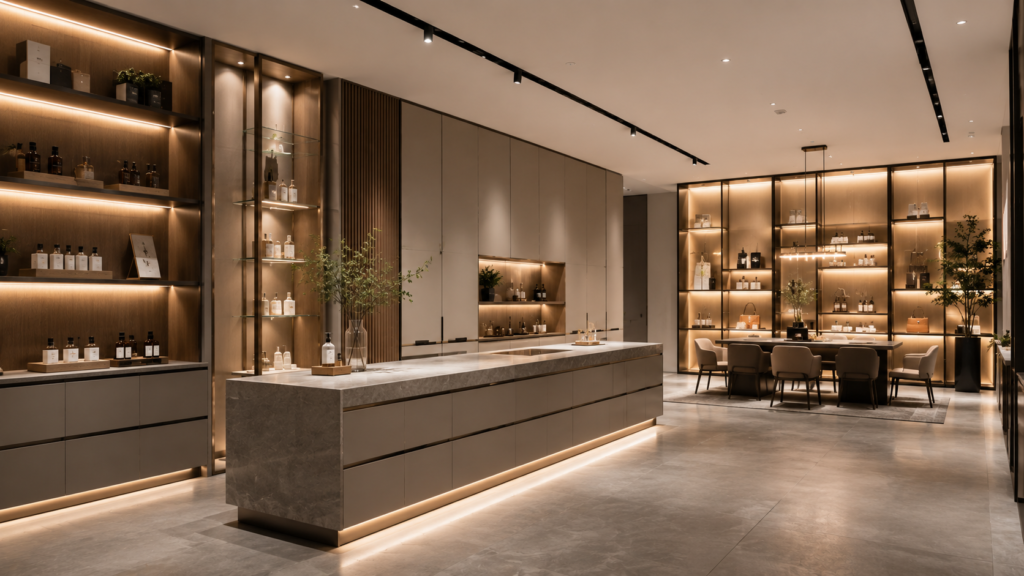
A major strength of custom cabinetry is the ability to hide clutter. In commercial spaces, there are always documents, tools, packaging materials, cleaning supplies, samples, cables, personal items, and daily-use products that need storage. Italian-style cabinetry often solves this through integrated systems.
Tall cabinet walls, hidden drawers, push-open panels, sliding doors, and internal organizers can keep everything accessible while maintaining a clean appearance. The result is a space that looks calm on the outside but works hard on the inside.
Italian design pays close attention to proportion. Cabinet height, width, door spacing, handle placement, open shelf ratios, and lighting positions all affect the final look. If the proportions are wrong, even expensive materials can look awkward. If the proportions are right, a simple cabinet can look highly refined.
This is why measurement and layout planning are important before production. NANHONGDINGYU’s process includes consultation, measurement, design development, production, delivery, installation, and after-sales support, creating a structured workflow from concept to completion.
Italian-style cabinetry often avoids bulky handles and visible hardware. Instead, it may use handle-free doors, recessed pulls, slim metal strips, soft-close hinges, and concealed drawer systems. These details create a cleaner surface and a more modern look.
For commercial spaces, seamless cabinetry also makes maintenance easier. Smooth surfaces are easier to clean, and fewer exposed details can reduce visual clutter.
Lighting is a major part of Italian-style commercial cabinetry. LED strips under shelves, warm backlighting behind display panels, interior cabinet lighting, and soft accent lighting can transform the way a space feels.
In retail, lighting helps highlight products. In offices, it improves clarity and comfort. In hospitality spaces, it adds mood and warmth. A well-designed cabinet lighting system can make ordinary storage feel architectural.
Commercial cabinetry must match the identity of the space. A law office may need dark wood and matte black details. A beauty salon may prefer cream tones, soft curves, and brushed metal. A modern café may use warm wood, stone textures, and open shelves. A fashion boutique may need glass, metal, and minimalist display walls.
Custom cabinetry allows the material palette to follow the brand personality rather than forcing the business to adapt to ready-made furniture.
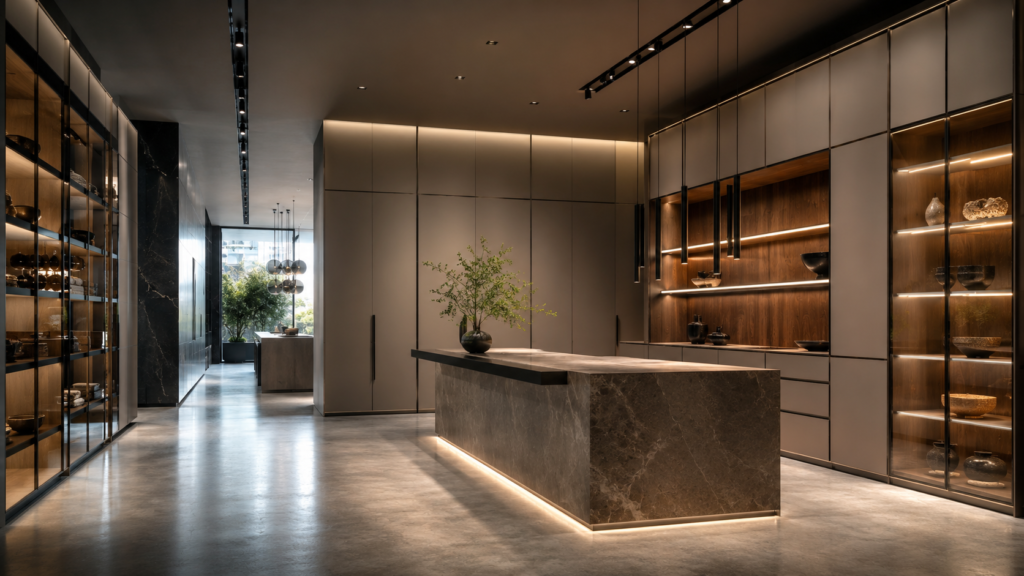
Retail cabinetry must display products beautifully while supporting sales. Italian-style display cabinets can create clear product zones, highlight hero items, and make the shopping path easier to understand. Open shelving, glass display cases, drawer storage, and concealed backroom cabinets can work together as one system.
For fashion, jewelry, cosmetics, accessories, furniture, and lifestyle brands, the right cabinetry can make products feel more valuable.
Office cabinetry needs to balance storage and visual calm. Italian-style systems can include full-height storage walls, floating shelves, meeting room cabinets, sample libraries, reception counters, and employee storage units. The goal is to reduce clutter while creating an organized, premium work environment.
For architecture studios, design agencies, consulting firms, and creative offices, cabinetry can also become part of the brand image.
Hotels need cabinetry that looks elegant and performs reliably. Guest room wardrobes, minibar units, bathroom vanities, lobby storage, restaurant service cabinets, and corridor storage areas all require careful planning.
Italian-style cabinetry is a strong fit because it can make hospitality interiors feel refined, consistent, and comfortable. The design can be minimal, warm, luxurious, or contemporary depending on the hotel’s positioning.
Restaurants and cafés need cabinetry that supports both service and atmosphere. Counter systems, display shelves, storage walls, wine cabinets, service stations, and back-bar units must look good while handling daily use.
Italian-style cabinetry can help create a polished dining environment. Warm wood, stone-look counters, soft lighting, and clean storage can make the space feel more inviting.
Beauty salons, spas, and clinics need storage for tools, products, towels, machines, documents, and customer items. At the same time, customers expect a clean and relaxing environment.
Custom commercial cabinetry can create treatment room storage, reception counters, product display walls, consultation cabinets, and hidden utility storage. Italian-style design can make these spaces feel professional, calm, and premium.
A cabinet system should not begin with style alone. It should begin with how people use the space. In a retail store, where does the customer enter? What products should they see first? Where does the staff store inventory? Where does checkout happen? In an office, what items need daily access? What can be hidden? Where do people gather?
When the user journey is clear, the cabinet layout becomes easier to design. Every shelf, drawer, door, and countertop can have a purpose.
One common mistake in commercial interiors is mixing display and storage without a clear system. This can make the space look messy. Italian-style cabinetry often solves this by creating a clean division between visible display and hidden storage.
For example, a showroom can use open shelves for featured products and lower cabinets for inventory. A salon can display retail products on illuminated shelves while hiding tools and supplies behind closed panels. An office can show books and awards while concealing files and equipment.
Cabinetry should feel connected to the business. A luxury brand may need soft lighting, stone textures, and precise detailing. A creative studio may prefer open shelves, flexible storage, and a warmer material palette. A technology company may choose matte finishes, metal accents, and clean geometry.
Italian-style cabinetry is flexible because it does not depend on one fixed look. It can be elegant, warm, modern, dramatic, or understated.
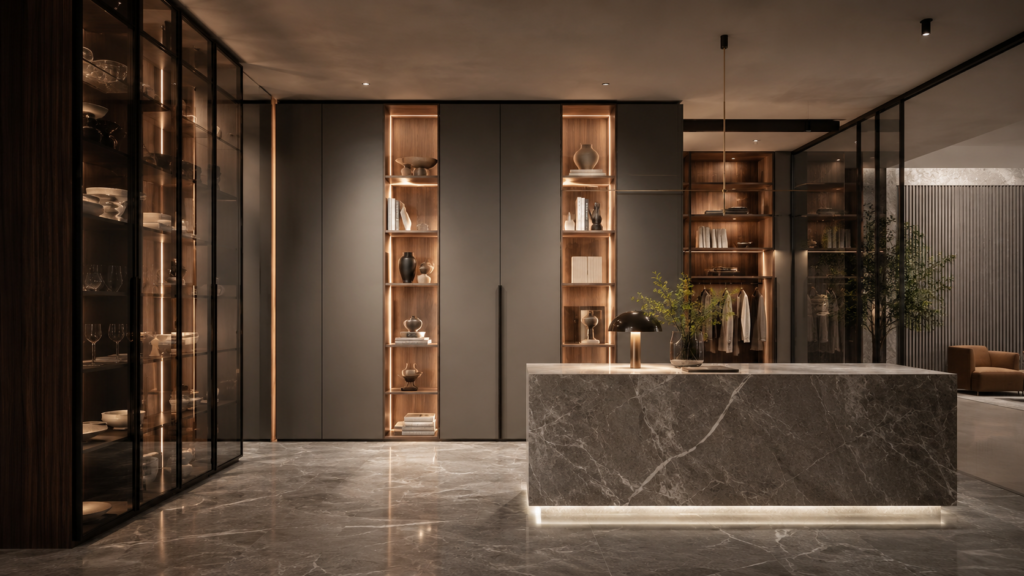
Matte finishes are popular because they reduce glare and create a soft, modern appearance. They work especially well in offices, salons, boutiques, and hospitality spaces. Matte cabinet doors can make a space feel calmer and more refined.
Wood adds warmth and natural character. Light oak, walnut, smoked wood, and textured veneer can bring an Italian-inspired richness to commercial interiors. Wood is especially effective when paired with stone, metal, or glass.
Stone-look surfaces can create a premium effect without making the design feel heavy. They work well for counters, reception areas, display backgrounds, and feature walls. In Italian-style spaces, stone textures often add quiet luxury.
Glass can be used for display cabinets, shelving, partitions, and product showcases. Metal trim can add structure and elegance. Slim black, champagne, bronze, or brushed metal details can make cabinetry feel more architectural.
Lighting should be planned with the materials. A dark wood cabinet may need warmer lighting. A glass display shelf may need hidden LED strips. A stone-look panel may look better with soft side lighting. Good lighting brings materials to life.
Ready-made cabinets may work for simple spaces, but commercial interiors often need a higher level of fit and function. Every business has different products, operations, dimensions, traffic patterns, and brand goals. Custom cabinetry allows each part of the space to be planned around real needs.
NANHONGDINGYU provides whole-home custom furniture solutions that include layout planning, material selection, design development, manufacturing, and on-site installation. Although the company’s website focuses strongly on whole-home customization, the same service logic can support commercial cabinetry: understand the space, design around the user, produce with precision, and install according to approved plans.
The first stage is understanding the project. This includes the business type, style direction, budget range, storage requirements, product categories, customer flow, and space dimensions. Accurate measurement is critical because cabinetry must fit the room precisely.
After measurement, the design team develops the cabinet layout. This includes cabinet height, door style, open shelf areas, drawer systems, display zones, lighting positions, and material combinations. The goal is to create a system that looks beautiful and supports daily work.
A visual preview helps clients understand the final result before production. NANHONGDINGYU’s website highlights 3D visual preview as part of its service, allowing clients to see the design before production begins. This reduces uncertainty and makes decision-making easier.
Before production, materials should be confirmed carefully. Color, texture, finish, edge details, hardware, lighting, and accessories all affect the final look. For Italian-style commercial cabinetry, small material decisions can have a big impact.
Once the design is approved, production begins. Panels are processed, hardware is prepared, and components are checked before delivery. A controlled production process helps improve accuracy and consistency.
Installation turns the design into a real space. Even a well-made cabinet can look poor if the installation is not accurate. Alignment, seams, door gaps, wall fit, lighting connection, and hardware adjustment all need attention.
Cabinetry is a long-term investment. After-sales support helps clients handle adjustments, maintenance, and future needs. NANHONGDINGYU’s website states that it offers after-sales support and warranty service for cabinetry projects.
A reception area can use a full-height cabinet wall with hidden storage, a floating counter, warm lighting, and a stone-look background. This creates a strong first impression while keeping daily office items hidden.
A boutique can use vertical display cabinets with glass shelves, integrated LED lighting, lower drawer storage, and slim metal trim. The products remain the focus, while the cabinetry creates a luxury environment.
A modern office can use handle-free cabinet doors, open display niches, file storage, and hidden printer compartments. This keeps the workspace clean and supports productivity.
A beauty salon can use soft beige cabinets, curved corners, illuminated shelves, and closed lower storage. The design can feel gentle, clean, and commercial at the same time.
A café can use wood textures, stone-look counters, open cup shelves, hidden supply cabinets, and back-bar lighting. The cabinetry supports workflow while strengthening the brand atmosphere.
A cabinet may look beautiful in a rendering, but it must also work in real life. Storage depth, door swing, traffic flow, and cleaning needs should be considered from the beginning.
Italian-style cabinetry depends on restraint. Too many finishes can make the space look busy. It is better to choose a controlled palette and repeat it consistently.
Without lighting, even good materials may look flat. Commercial cabinetry should usually include some form of integrated or nearby lighting.
Commercial spaces experience daily use. Surfaces should be easy to clean, hardware should be durable, and storage should remain accessible.
Italian-style commercial cabinetry brings together beauty, structure, and function. It helps commercial spaces look more refined, feel more organized, and work more efficiently. Through clean lines, smart storage, balanced proportions, elegant materials, and careful lighting, this style can elevate offices, retail stores, salons, cafés, hotels, showrooms, and many other business environments.
For NANHONGDINGYU, the value of Italian-style commercial cabinetry fits naturally with its broader custom interior service model. From planning and design to production, installation, and after-sales support, a complete cabinetry system should not only look impressive on the first day. It should continue to support the space, the brand, and the people who use it every day.
Italian-style commercial cabinetry is a modern cabinet design approach that focuses on clean lines, refined materials, hidden storage, balanced proportions, and elegant functionality. It is commonly used in offices, retail stores, hotels, salons, cafés, showrooms, and other business interiors.
It works well because it creates a professional, organized, and high-end atmosphere. The design helps businesses improve storage, display products beautifully, and build a stronger brand image through refined interior details.
Common materials include matte cabinet panels, wood veneer, stone-look surfaces, glass, metal accents, and integrated LED lighting. These materials create a clean, luxurious, and durable finish for commercial interiors.
Yes. Custom cabinetry can be designed based on space size, business type, storage needs, display requirements, color preferences, and brand style. This makes it more flexible than standard ready-made cabinets.
It can be used in reception areas, retail display walls, office storage systems, hotel wardrobes, café counters, salon product displays, showroom cabinets, and restaurant service areas.
NANHONGDINGYU can support cabinetry projects through space planning, cabinet design, material selection, production, installation, and after-sales service, helping clients create functional and visually refined interior spaces.
 03Jul
03Jul
 04Jul
04Jul
 by
by