Modern story house built from scratchinto comfort and usability
Lorem ipsum dol amet consectetu adipiscing elit, seding doi eiusmod.


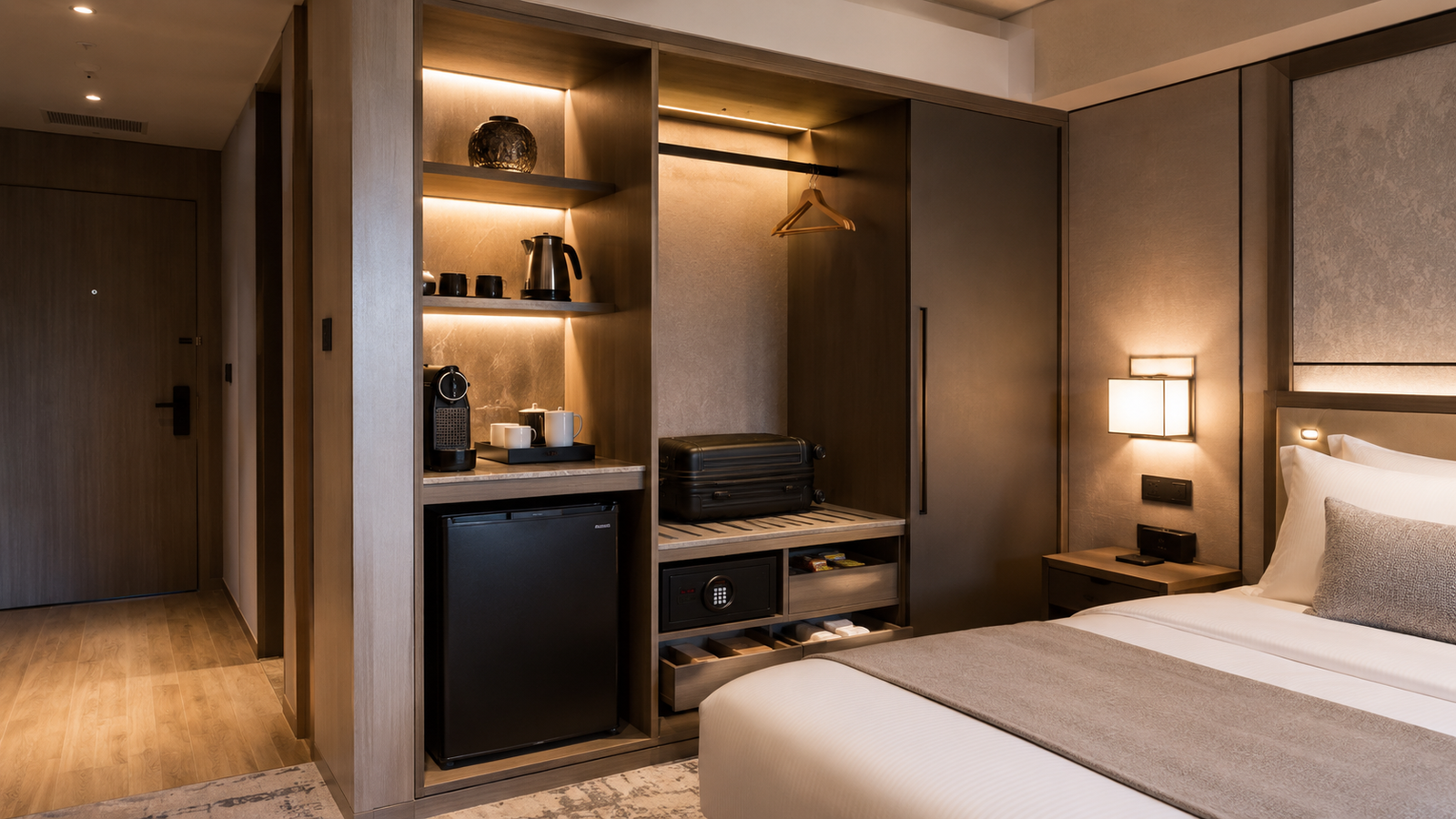
In modern hospitality design, every inch of space must work harder. Guests expect clean rooms, smooth circulation, elegant interiors, and easy access to everything they need. Hotel operators, on the other hand, need rooms that are easier to maintain, faster to clean, safer to use, and more efficient to manage. This is where the hotel equipment embedded cabinet becomes an important part of interior planning.
A hotel equipment embedded cabinet is more than a simple storage unit. It is a built-in furniture system designed to integrate hotel appliances, service equipment, guest amenities, electrical access, and storage functions into one organized structure. Instead of placing loose items around the room, the cabinet hides and organizes them inside a clean, custom-built layout.
For hotels, serviced apartments, resorts, boutique accommodations, and long-stay guest rooms, embedded cabinetry helps create a polished environment. It keeps equipment accessible but not visually messy. It supports a better guest experience while improving operational efficiency behind the scenes.
At NANHONGDINGYU, custom cabinetry is not treated as decoration only. It is planned as part of the full interior system, from layout and materials to production and installation. For hotel spaces, this approach is especially valuable because the cabinet must balance beauty, durability, function, maintenance, and brand identity.
A hotel equipment embedded cabinet is a customized built-in cabinet designed to house and organize hotel-related equipment within the room or service area. It can be used in guest rooms, suites, corridors, housekeeping stations, lobby areas, pantry zones, or staff service rooms.
Unlike freestanding furniture, embedded cabinets are planned according to the wall structure, room size, equipment dimensions, user habits, and hotel operation needs. They are usually integrated into the interior design so the final result looks clean, intentional, and space-saving.
A hotel equipment embedded cabinet may include space for:
Many hotel rooms require a mini fridge, coffee machine, electric kettle, cups, tea bags, bottled water, and snack storage. Instead of placing these items randomly on a desk or shelf, an embedded cabinet creates a dedicated beverage station.
A built-in safe box can be placed inside a cabinet with proper ventilation, door clearance, and comfortable user height. Additional drawers or shelves can be added for guest belongings, laundry bags, slippers, or travel items.
Some hotels provide an iron, ironing board, shoehorn, shoe brush, garment care tools, or cleaning kits. A well-planned cabinet keeps these items hidden but easy to find.
Embedded cabinets can also support power outlets, USB charging ports, lighting strips, cable management channels, and equipment wiring. This helps reduce visible cables and improves the overall room experience.
In corridors or service zones, embedded cabinets can store cleaning supplies, spare linens, towels, tools, amenity refills, and staff-use equipment in a controlled and organized way.
Hotel rooms are not ordinary residential spaces. They are used by different guests every day, cleaned frequently, and expected to stay visually consistent for years. Therefore, hotel cabinetry must be stronger, more practical, and more carefully planned than standard home furniture.
Many hotel rooms are limited in size, especially in city hotels, business hotels, and boutique properties. A hotel equipment embedded cabinet helps reduce clutter by combining several functions into one compact structure.
Instead of using separate furniture pieces for the mini bar, luggage storage, safe box, coffee station, and wardrobe, designers can connect these functions into one wall system. This makes the room feel larger and more organized.
Guests notice the overall feeling of a room before they notice individual details. If equipment is exposed everywhere, the space can feel messy even when it is clean. Embedded cabinets hide functional items behind refined doors, drawers, panels, and open niches.
This creates a calm, premium, and professional appearance. It also allows hotels to maintain a consistent design language across different room types.
A good embedded cabinet makes the guest journey easier. Guests should not need to search for the safe box, cups, hair dryer, fridge, or kettle. The cabinet layout should guide them naturally.
Clear zoning, comfortable height, smooth hardware, soft lighting, and easy-to-open doors all improve the user experience. When everything is placed logically, guests feel that the room has been carefully designed for their comfort.
From an operations perspective, embedded cabinetry can make cleaning and inspection faster. Staff can check equipment, refill amenities, replace supplies, and clean surfaces more efficiently when everything has a fixed position.
Durable surfaces, moisture-resistant panels, strong hinges, and replaceable parts also reduce long-term maintenance pressure. For hotels with many rooms, these small efficiencies can create major savings over time.
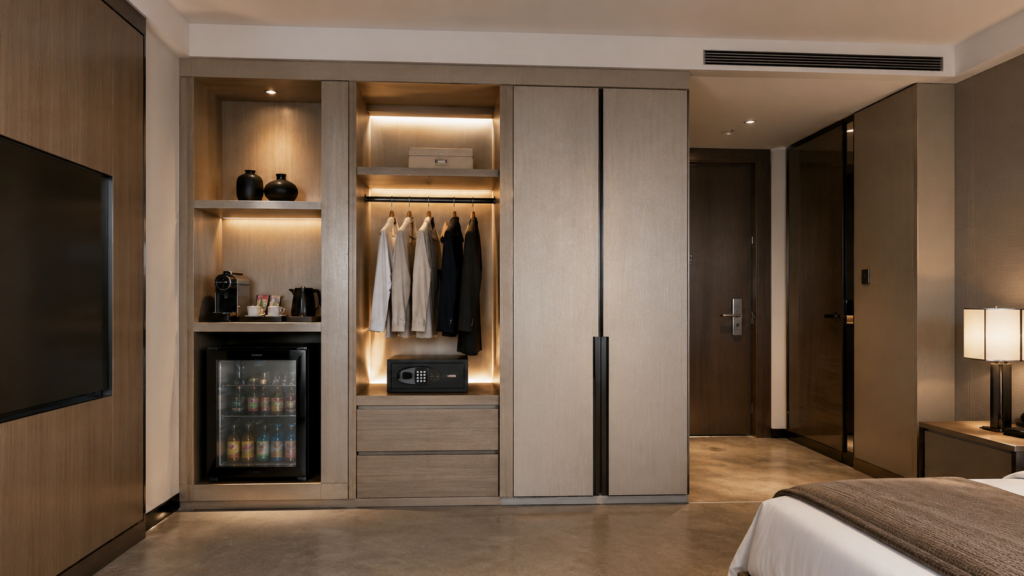
A successful hotel equipment embedded cabinet must combine interior design and practical engineering. It should look elegant, but it must also work every day under heavy use.
The first step is to understand what the cabinet needs to hold. Before choosing colors or finishes, the design team should confirm the equipment list, dimensions, power requirements, ventilation needs, door opening directions, and daily usage habits.
For example, a mini fridge needs proper heat dissipation. A coffee machine may need an easy-clean surface below it. A safe box should be placed at a comfortable height. A kettle area should be away from materials that are sensitive to heat or moisture.
When the function is planned correctly, the final design becomes more reliable.
The cabinet should not be designed as an isolated furniture piece. It should respond to the complete room layout, including the entrance, bed position, bathroom door, luggage flow, window direction, desk area, and lighting plan.
In a compact room, the embedded cabinet may become part of the entryway wall. In a suite, it may connect with a pantry, wardrobe, TV wall, or decorative display area. In a resort villa, it may blend with natural materials and open shelving.
The best design feels integrated rather than added later.
Hotel equipment needs to be easy to use, repair, and replace. If a cabinet looks beautiful but makes it difficult to access the fridge, wiring, safe box, or service panel, it will create problems during operation.
Good embedded cabinet design includes removable panels, hidden access points, proper clearances, and logical installation details. These features may not be obvious to guests, but they are important for hotel owners and maintenance teams.
Some equipment produces heat or requires airflow. Mini fridges, electrical panels, routers, lighting transformers, and certain appliances should not be sealed inside a closed cabinet without ventilation.
Vent holes, back gaps, aluminum grilles, raised bases, and heat-resistant surfaces may be needed depending on the equipment. Safety planning should also consider waterproofing, electrical protection, anti-tip structure, rounded corners, and fire-rated material requirements where applicable.
Hotel cabinets experience frequent contact, cleaning, and long-term wear. Materials should be selected for durability, stain resistance, moisture resistance, easy cleaning, and stable performance.
Common finish options may include laminate, veneer, lacquer, melamine board, PET panels, wood grain surfaces, stone-look panels, metal trims, and glass accents. The right choice depends on the hotel brand, budget, room category, and maintenance expectations.
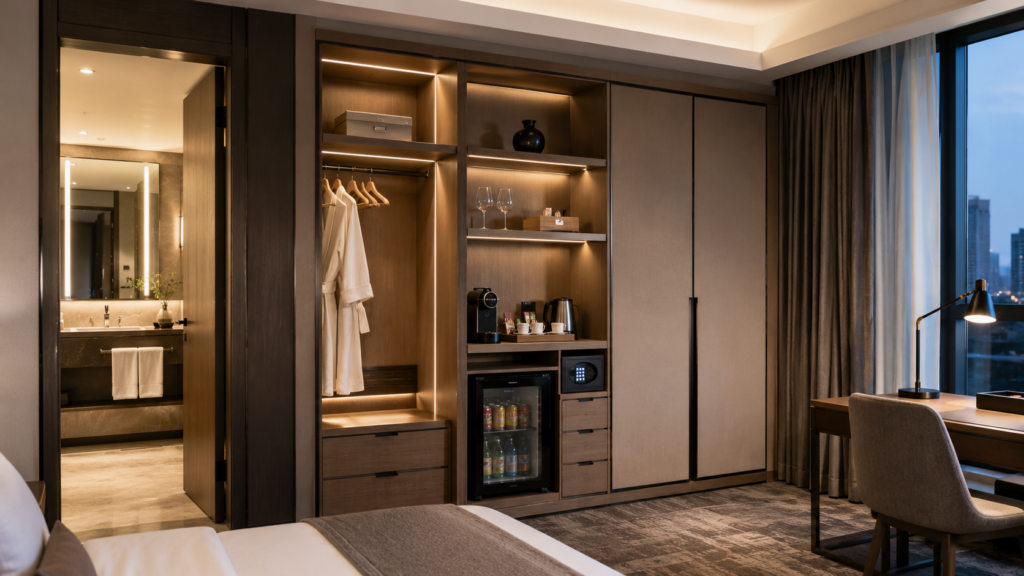
The hotel equipment embedded cabinet can be customized for different zones. Each zone has different functions and design priorities.
This is the most common application. It may combine a mini bar, coffee station, safe box, drawer storage, open display shelf, wardrobe connection, and luggage area.
For business hotels, the design may be simple, efficient, and modern. For luxury hotels, it may include refined materials, soft lighting, hidden handles, and premium hardware. For long-stay hotels, it may include a compact kitchenette or additional storage.
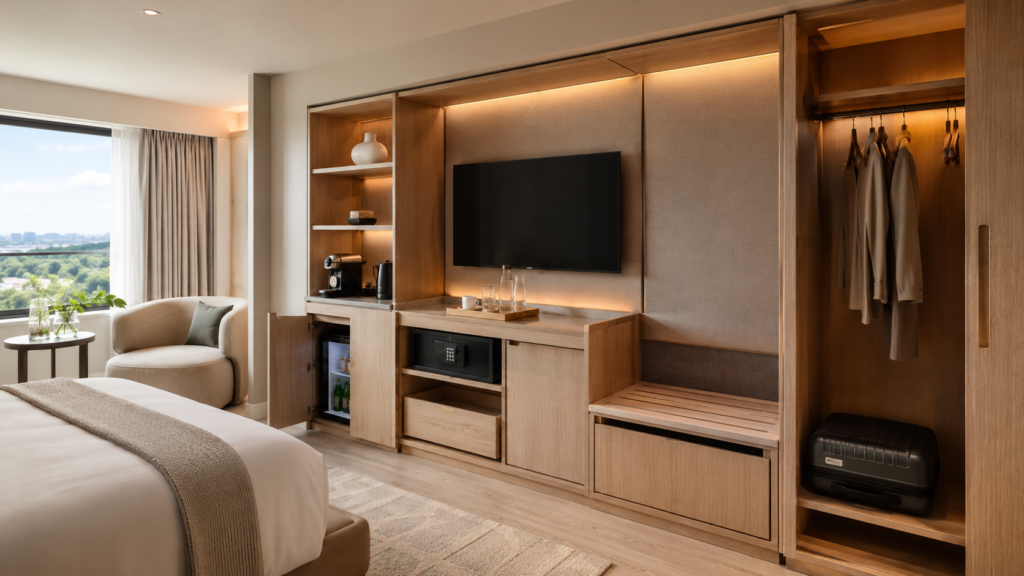
Many hotel rooms combine the TV wall with embedded storage. The cabinet may include a TV panel, equipment shelf, mini fridge, display niche, writing desk extension, and hidden cable management.
This design helps reduce separate furniture pieces and creates a stronger visual focus in the room.
In serviced apartments, extended-stay hotels, and suites, embedded cabinets may include a sink, microwave, induction cooktop, refrigerator, tableware storage, and waste bin zone.
This type of cabinet requires stronger planning for plumbing, power, ventilation, moisture resistance, and countertop durability.
A wardrobe-style embedded cabinet may integrate hanging space, luggage racks, safe box, slippers, laundry bags, ironing tools, extra pillows, and bedding storage.
This design is especially useful near the entrance or bathroom area, where guests naturally change clothes and organize belongings.
In hotel corridors or service areas, embedded cabinets can store towels, cleaning tools, replacement amenities, maintenance supplies, and emergency equipment.
These cabinets should be strong, easy to clean, lockable when needed, and designed for quick staff access.
For hotel projects, customization is not only about size. It is about creating a complete solution that supports design, production, installation, and long-term use.
NANHONGDINGYU’s custom approach begins with understanding the space. The team studies the room layout, equipment requirements, storage goals, guest movement, and visual style. This helps ensure that the cabinet is not only attractive but also practical.
A hotel equipment embedded cabinet should be planned together with the room’s walls, lighting, doors, flooring, and other furniture. When all these elements are coordinated, the final space feels more complete and professional.
Different hotel brands need different material expressions. A business hotel may prefer clean wood grain, matte finishes, and efficient storage. A luxury hotel may require richer textures, metal accents, stone effects, and soft lighting. A resort may need warmer natural tones and relaxed open shelving.
NANHONGDINGYU can support material selection based on the project’s budget, design concept, and performance needs. The goal is to create a cabinet system that matches both the brand image and daily operation requirements.
For hotel owners and designers, previewing the result before production is important. Cabinet proportions, color matching, equipment placement, and visual balance can be reviewed through drawings or 3D renderings.
This helps reduce misunderstandings and improves decision-making before materials are cut. It also allows project teams to adjust details early, which can save time and cost later.
Embedded cabinets require accurate measurements and precise manufacturing. If the size is wrong, the cabinet may not fit the wall, equipment may not align, or installation may become difficult.
Through factory production, panels, hardware, door systems, shelves, and accessories can be processed according to approved drawings. Quality checks before delivery help ensure that the final installation is smoother and more predictable.
Installation is a critical step for hotel cabinetry. Even a well-made cabinet can fail if it is not installed correctly. Wall alignment, cabinet leveling, door gaps, equipment placement, and hardware adjustment all affect the final result.
NANHONGDINGYU’s service concept includes project support from planning to installation and after-sales follow-up. For hotel projects, this full-process support helps reduce coordination pressure for owners, contractors, and interior designers.
When planning a hotel equipment embedded cabinet, several details can make the final product more useful and more durable.
Cables should be organized behind panels or through built-in channels. This keeps the cabinet clean and reduces safety risks.
Soft-close hinges and drawer slides improve the guest experience and reduce noise, especially in hotel rooms where quiet comfort is important.
Adjustable shelves make the cabinet more flexible when equipment models or amenity packages change in the future.
Ventilation openings should be included for refrigerators, routers, electrical modules, or any heat-producing equipment.
Surfaces near coffee machines, kettles, mini bars, and guest-use areas should resist stains, moisture, and frequent wiping.
For staff areas or specific guest room functions, lockable cabinet sections can help protect supplies, equipment, or private-use items.
LED strips or small cabinet lights can improve visibility and create a more premium room atmosphere.
A hotel equipment embedded cabinet should match the brand identity of the property.
This style usually uses clean lines, neutral colors, practical storage, and durable materials. The cabinet should support fast guest turnover, easy cleaning, and a professional look.
Boutique hotels often need stronger personality. The cabinet may include custom colors, artistic handles, open display areas, decorative panels, or unique material combinations.
Luxury hotel cabinetry should feel refined and quiet. Details such as hidden handles, premium finishes, soft lighting, metal trims, and precise alignment can make the room feel more elevated.
Resort hotels may prefer warm wood textures, natural colors, woven elements, stone-look surfaces, and relaxed open shelves. The cabinet should feel comfortable and connected to the environment.
For long-stay rooms, storage and usability are especially important. Cabinets may need to include kitchen functions, larger wardrobes, laundry storage, and flexible compartments.
Even a small cabinet design mistake can affect hotel operations. Here are some common problems to avoid.
Equipment should be confirmed before production. If the mini fridge, safe box, microwave, or coffee machine changes after the cabinet is made, the cabinet may need costly adjustments.
Closed cabinets without airflow can cause equipment overheating or shorten appliance life.
Too many small compartments may look interesting, but they can confuse guests and slow down cleaning. A good cabinet should be simple and intuitive.
Low-quality materials may look acceptable at first but can wear quickly under hotel use. This can lead to scratches, swelling, loose hardware, or visible aging.
Cabinet installation should coordinate with electrical work, flooring, wall finishing, and equipment delivery. Poor timing can delay the project.
A hotel equipment embedded cabinet is an investment in guest experience, room quality, and operational efficiency. It helps hotels create a cleaner visual environment while making daily service easier.
For owners, well-planned cabinetry can improve room presentation, reduce clutter, protect equipment, and increase perceived value. For guests, it creates a more comfortable and organized stay. For staff, it supports faster maintenance and more consistent room preparation.
When custom cabinetry is designed with the full space in mind, it becomes part of the hotel’s brand experience. It is not just where equipment is stored. It is how the room communicates quality, order, and care.
The modern hotel room must be beautiful, efficient, durable, and easy to maintain. A hotel equipment embedded cabinet helps achieve all of these goals by integrating equipment, storage, power access, guest amenities, and interior design into one custom-built system.
From guest room mini bars to wardrobe storage, media walls, pantry zones, and housekeeping cabinets, embedded cabinetry can improve both the guest-facing experience and the behind-the-scenes workflow.
With a full-process customization approach, NANHONGDINGYU can help hotel projects move from space planning and material selection to design visualization, factory production, installation, and after-sales support. For hotel owners, developers, and interior designers, this creates a more reliable way to build refined, functional, and long-lasting hospitality interiors.
A hotel equipment embedded cabinet is a built-in cabinet system designed to organize hotel room equipment such as mini bars, safes, coffee machines, kettles, storage shelves, and electrical access points within one clean and space-saving structure.
Embedded cabinets help hotels improve space efficiency, reduce visual clutter, enhance guest comfort, and make daily housekeeping easier. They also create a more refined and professional room appearance.
Common equipment includes a mini fridge, safe box, coffee machine, electric kettle, cups, bottled water, snacks, ironing tools, drawers, open shelves, power outlets, and hidden cable management systems.
Yes. Embedded cabinets can be customized based on room size, hotel style, equipment dimensions, material preferences, storage needs, and brand positioning. Custom design ensures better fit, function, and visual consistency.
Suitable materials include moisture-resistant panels, laminate, veneer, lacquer, melamine board, PET panels, metal trims, glass, and stone-look surfaces. The best choice depends on hotel grade, budget, design style, and durability needs.
They make hotel rooms feel cleaner, more organized, and easier to use. Guests can quickly find the mini bar, safe, coffee station, wardrobe, and storage areas without confusion, creating a smoother and more comfortable stay.
 03Jul
03Jul
 04Jul
04Jul
 by
by