Home renovation newand orders custom
Various versions have evolve over the year sometimes by accident.



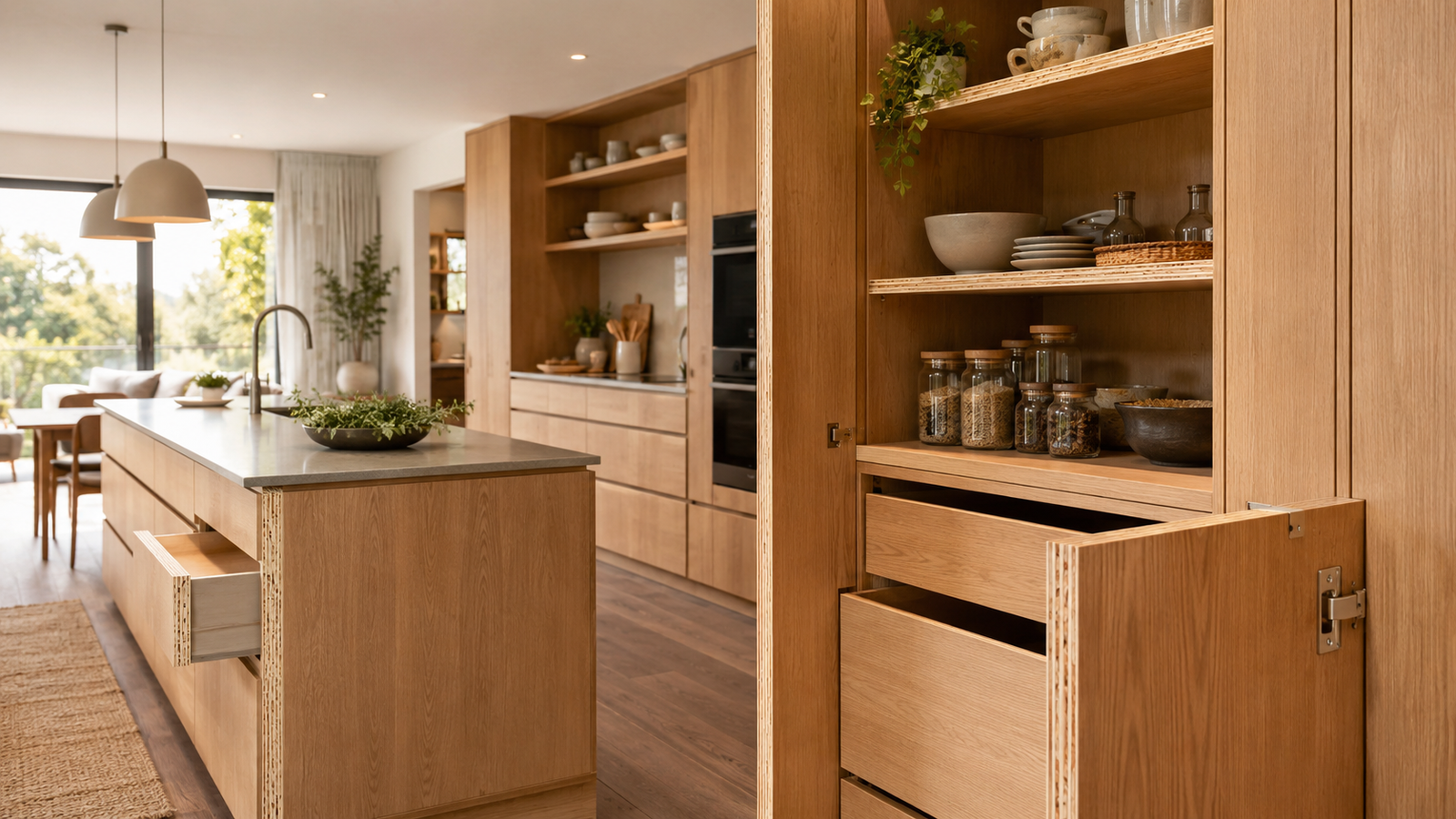
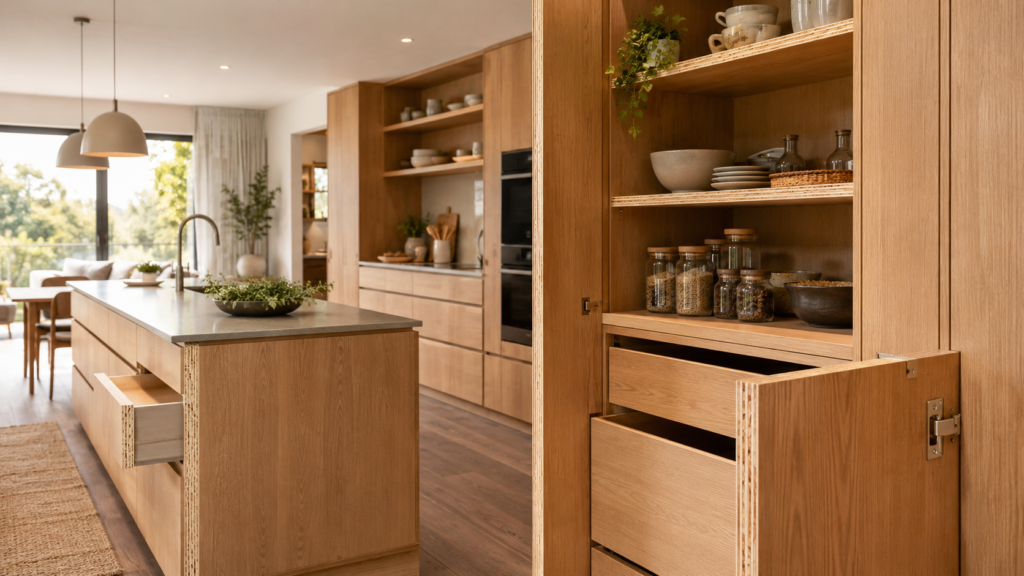
In modern home renovation, cabinets are no longer simple storage boxes placed against a wall. They shape the way a home functions, feels, and supports daily life. From kitchens and wardrobes to entryway systems, bathroom vanities, study rooms, and full-wall storage units, cabinet quality directly affects comfort, durability, organization, and the overall value of a home.
Among many cabinet materials, multilayer solid wood board has become a popular choice for homeowners who want a balance of strength, stability, natural texture, and long-term practicality. It is widely used in custom cabinetry because it offers better structural performance than many low-density boards while still providing good design flexibility. For families planning a whole-home customization project, choosing the right cabinet body material is one of the most important decisions.
A beautiful cabinet door may attract attention first, but the cabinet body is the real foundation. It supports the doors, shelves, hardware, drawers, countertop, and daily storage weight. If the cabinet body is weak, poorly sealed, or unstable, the entire system can lose shape, produce noise, absorb moisture, or age faster than expected. That is why multilayer solid wood board deserves serious attention.
For a custom interior brand like NANHONGDINGYU, cabinet materials are not just technical details. They are part of the complete home experience. A well-planned cabinet system should combine design, material selection, accurate production, professional installation, and after-sales support. When multilayer solid wood board is used correctly, it can help create cabinets that are durable, practical, visually refined, and suitable for many areas of the home.
Multilayer solid wood board is an engineered wood panel made by bonding multiple layers of thin wood veneers together. These layers are usually arranged in alternating grain directions, which helps improve stability and reduce the risk of warping. Compared with ordinary particleboard or low-grade fiberboard, multilayer solid wood board generally has a stronger internal structure and better screw-holding capacity.
The term “solid wood” in this context does not mean the board is one single piece of natural timber. Instead, it means that the panel is built from real wood veneer layers. This structure gives it many of the benefits of natural wood while reducing some of the movement problems that can happen with large solid timber panels.
The key strength of multilayer solid wood board comes from its cross-laminated structure. Each veneer layer supports the next one. When the wood grain changes direction layer by layer, the board becomes more resistant to shrinking, expanding, and bending. This makes it especially useful for cabinets that need to remain stable under daily use.
In cabinetry, stability is extremely important. Cabinet bodies often carry heavy dishes, cookware, clothing, books, tools, appliances, or household items. They also need to hold hinges, drawer slides, connectors, and shelves securely. A strong layered board can help the cabinet maintain its shape and support hardware more reliably.
Particleboard is made from wood chips and particles bonded together. MDF is made from fine wood fibers pressed into panels. Both can be useful in certain applications, especially when budget control is a priority. However, multilayer solid wood board often performs better in strength, moisture resistance, and screw-holding ability, depending on the grade and production quality.
For cabinet bodies, the material must do more than look good. It must resist stress, hold hardware, stay flat, and support long-term use. This is where multilayer solid wood board can become a strong choice for homeowners who want cabinets that feel more reliable and substantial.
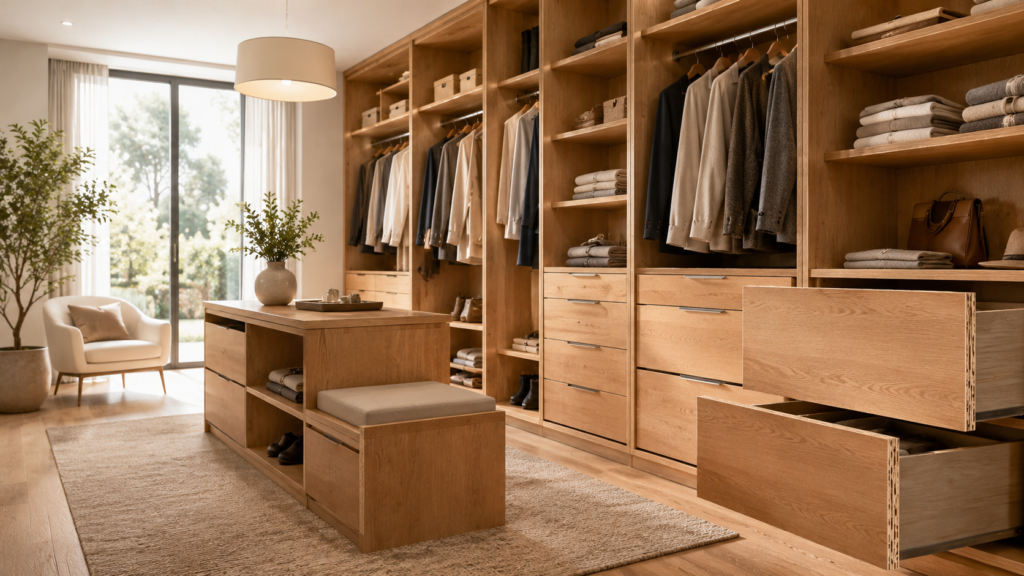
Many homeowners focus heavily on cabinet doors, color, countertops, and handles, but the cabinet body is what determines much of the cabinet’s lifespan. A cabinet body is the internal structure of the cabinet. It includes side panels, bottom panels, top panels, back panels, partitions, and shelves.
If the cabinet body is poorly made, even expensive doors and beautiful finishes cannot fully solve the problem. Doors may become misaligned, shelves may sag, drawers may feel unstable, and hardware may loosen over time. A strong cabinet body gives the entire system a better foundation.
Cabinets carry weight every day. Kitchen cabinets hold plates, pots, pans, small appliances, seasonings, and food storage. Wardrobes hold clothes, bedding, luggage, bags, and accessories. Entryway cabinets hold shoes, umbrellas, cleaning tools, and outdoor gear. Each cabinet needs enough strength to support these items without bending or deforming.
Multilayer solid wood board is valued because its internal structure can handle daily load better than many weaker boards. When properly designed, cut, sealed, and installed, it helps reduce the risk of sagging shelves and unstable cabinet frames.
Cabinet hardware depends on the board structure. Hinges, drawer slides, connectors, pull-out baskets, and lift-up systems all need strong screw-holding support. If a board is too loose or low-density, screws may loosen more easily, especially after repeated opening and closing.
Because multilayer solid wood board is made from bonded veneer layers, it often provides better grip for screws than particle-based boards. This is especially helpful for high-use areas such as kitchen cabinets, wardrobe doors, and drawer systems.
Home interiors are affected by temperature, humidity, ventilation, and seasonal changes. A cabinet body must remain stable in these changing conditions. Multilayer solid wood board can offer good dimensional stability because of its layered structure. This helps reduce the risk of noticeable warping when compared with some natural solid wood panels.
Of course, board quality, adhesive quality, edge sealing, installation accuracy, and room environment still matter. No material works well if it is poorly processed or installed. But as a cabinet body material, multilayer solid wood board gives designers and homeowners a strong starting point.
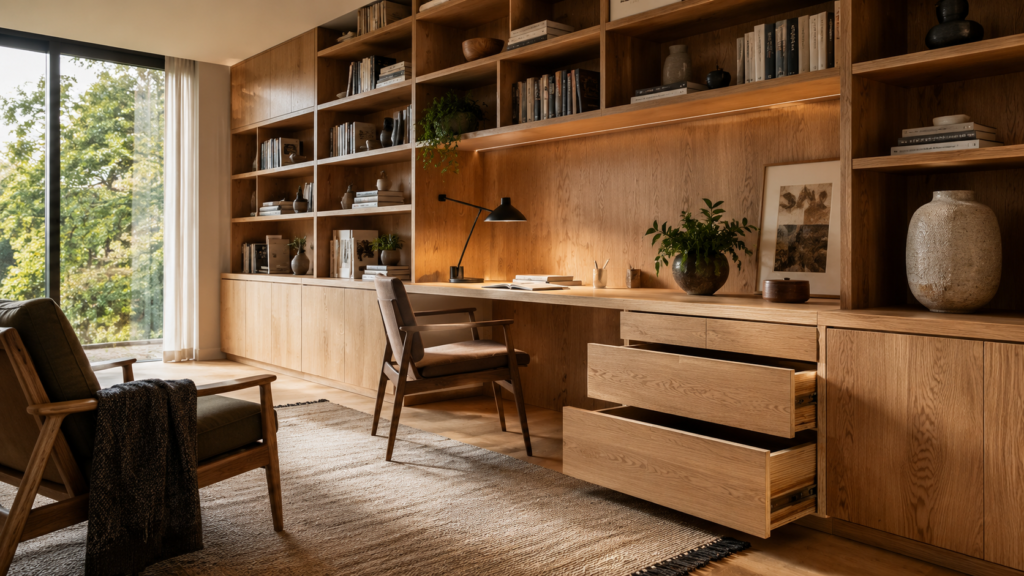
One of the biggest advantages of multilayer solid wood board is strength. The layered veneer structure creates a firm panel that can support the cabinet frame, hardware, and storage weight. This makes it suitable for both small cabinets and large custom storage systems.
For whole-home customization, strength matters because cabinets are often designed to fit exact spaces. Full-height wardrobes, floor-to-ceiling storage walls, kitchen islands, and integrated cabinet systems all need materials that can handle pressure and remain steady.
Cabinets are not static objects. Doors open and close. Drawers slide in and out. Pull-out storage moves frequently. Hardware is constantly under pressure. A board with good screw-holding ability helps keep these parts secure.
Multilayer solid wood board can hold screws firmly when the board quality is high and the installation is done correctly. This makes it a practical option for areas that require durable hardware performance.
Compared with some standard particleboards, multilayer solid wood board often performs better in damp environments, especially when the board is properly sealed. This does not mean it is waterproof. No wood-based cabinet material should be exposed to standing water for long periods. However, it can be more suitable for kitchens, laundry zones, and other areas where humidity may change.
Good edge sealing is essential. Moisture often enters panels from exposed edges, cutouts, and poorly sealed joints. A reliable custom cabinet provider should pay attention to edge banding, panel finishing, sink cabinet protection, and installation details.
Multilayer solid wood board offers a more natural wood-based structure than many synthetic boards. For homeowners who care about material texture and a more substantial cabinet feel, this can be an important advantage. Even when the surface is finished with veneer, laminate, melamine, or paint, the internal wood-layer structure gives the cabinet body a stronger and more premium foundation.
Custom cabinets require flexibility. Every home has different dimensions, wall conditions, storage habits, and design goals. Multilayer solid wood board can be cut, shaped, drilled, and assembled into many cabinet forms. It works well for kitchens, wardrobes, TV cabinets, bookcases, bathroom storage, and multifunctional rooms.
This makes it especially suitable for whole-home custom interior projects, where consistency and reliability across different spaces are important.
The kitchen is one of the most demanding areas in the home. Cabinets must deal with weight, heat, humidity, oil, frequent cleaning, and daily movement. Multilayer solid wood board can be a strong choice for kitchen cabinet bodies because it offers good load-bearing ability and a more stable structure.
Base cabinets carry countertops, sinks, cookware, and heavy storage items. They need strong side panels, bottom panels, and support structures. Multilayer solid wood board can help create a stable base, especially when combined with proper cabinet legs, reinforced joints, and moisture protection around the sink area.
Wall cabinets require secure installation. Since they are mounted above the floor, the cabinet body and hardware connection must be reliable. A strong board helps support hinges and shelves while reducing the risk of deformation.
Wardrobes often have large doors, tall panels, hanging rods, drawers, and shelves. They must support clothing weight while maintaining a clean appearance. Multilayer solid wood board can provide the strength needed for large custom wardrobe systems.
For sliding door wardrobes, hinged wardrobes, and walk-in closet storage, stable panels help the cabinet stay aligned. This supports smoother door movement and better long-term usability.
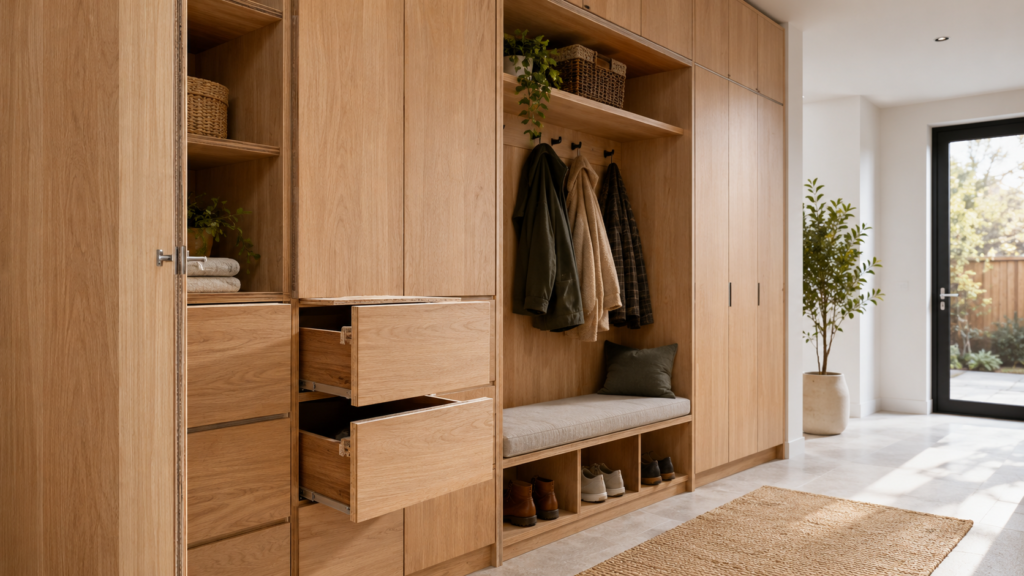
Entryway cabinets handle shoes, coats, bags, keys, sports gear, umbrellas, and cleaning items. They are used every day, often by multiple family members. A strong cabinet body is important because entryway storage is exposed to repeated opening, closing, and impact.
Multilayer solid wood board works well for entryway cabinets because it can support shelves, bench seating, tall storage, and mixed open-and-closed layouts.
Modern living rooms often include TV walls, display shelves, hidden storage, bookcases, and decorative cabinets. These pieces must look refined while also being practical. Multilayer solid wood board can support larger cabinet structures and help maintain straight lines in long horizontal or vertical designs.
For homeowners who want a clean, built-in look, the stability of the cabinet body is essential. A strong panel structure helps create precise seams, balanced proportions, and long-lasting visual quality.
Bookcases and office cabinets carry heavy loads. Books, documents, printers, and office equipment can place serious pressure on shelves. Multilayer solid wood board is a useful material for these spaces because it provides stronger support and better resistance to bending.
Cabinet board thickness affects strength, appearance, and cost. Common cabinet body panels often use practical thicknesses suitable for side panels, shelves, and structural parts. Thicker boards can provide better support, but they also increase weight and cost.
A professional designer should recommend thickness based on the cabinet type, span length, load requirements, and installation method. For example, a long bookshelf shelf may need a stronger structure than a small bedside cabinet.
Edge banding is one of the most important details in cabinet production. It protects the board edge, improves appearance, and helps reduce moisture entry. Poor edge banding can peel, crack, or leave gaps. This can shorten cabinet life and make the product feel lower quality.
For multilayer solid wood board, clean edge sealing is especially important because the board has visible layers at the edges. High-quality edge banding creates a smoother, more finished look while protecting the internal structure.
Multilayer solid wood cabinet bodies can be paired with different surface finishes. These may include wood veneer, laminate, melamine, painted finishes, or decorative panels. The best choice depends on the home style, budget, cleaning needs, and durability expectations.
For minimalist homes, matte finishes and neutral tones can create a calm, modern look. For warm natural interiors, wood grain surfaces can make the cabinets feel softer and more organic. For high-use spaces, easy-clean surfaces may be more practical.
Cabinet bodies should work with cabinet doors, walls, flooring, lighting, and furniture. Even though the cabinet body may not always be fully visible, its color and finish still affect the overall design, especially in open shelves, glass-door cabinets, and walk-in closets.
NANHONGDINGYU can use design planning and material selection to create a more complete interior effect. Instead of treating each cabinet as a separate object, a whole-home approach helps connect every space through consistent materials, colors, proportions, and details.
When choosing any wood-based board, homeowners should pay attention to formaldehyde emission standards, adhesive quality, ventilation, and supplier reliability. A board may have a strong structure, but indoor safety also matters. Families with children, older adults, or sensitive household members should be especially careful when selecting cabinet materials.
A responsible cabinet provider should help customers understand material grades and environmental standards. Low-emission boards can support a healthier indoor environment, especially in large whole-home customization projects where many cabinets are installed at once.
Even with better materials, new cabinets may have some odor from boards, adhesives, finishes, or packaging. Proper ventilation after installation helps improve indoor air quality. Homeowners should keep windows open when possible, use good air circulation, and allow enough time before heavy use.
Environmental performance should be considered together with durability, budget, design goals, and maintenance needs. The best cabinet solution is not always the most expensive option. It is the option that fits the home’s real conditions and long-term usage needs.
Whole-home customization requires more than choosing a material from a catalog. It requires understanding how each family lives. Storage habits, cooking style, clothing volume, children’s needs, cleaning routines, appliance sizes, and future lifestyle changes all affect cabinet design.
Multilayer solid wood board supports this process because it can be used across many home areas. This allows designers to maintain material consistency while adapting cabinet functions to each room.
Accurate measurement is the beginning of a successful cabinet project. Walls may not be perfectly straight. Floors may not be perfectly level. Pipes, beams, outlets, switches, and windows may affect cabinet layout. A professional team must measure carefully before production.
After measurement, designers can create layout plans, cabinet structures, and 3D visuals. This helps homeowners understand how the finished space will look and function before production begins.
Factory production gives custom cabinets more accuracy than on-site manual cutting alone. Panels can be processed, drilled, sealed, and checked before delivery. When the cabinet body uses multilayer solid wood board, production accuracy helps maximize the material’s strength and stability.
Installation is equally important. Even good materials can perform poorly if the cabinets are installed incorrectly. Leveling, wall fixing, seam alignment, door adjustment, hardware tuning, and final inspection all affect the finished result.
Cabinets need adjustment over time. Hinges may need tuning. Drawer slides may need checking. Doors may need alignment after seasonal changes or heavy use. A complete service system gives homeowners more confidence after installation.
This is why NANHONGDINGYU’s whole-home customization approach is valuable. The goal is not only to deliver cabinets, but to create a clear process from consultation to installation and support.
Although multilayer solid wood board can have better moisture resistance than some materials, it is still wood-based. Homeowners should avoid long-term water exposure. Wipe spills quickly, especially near sinks, bathroom vanities, and entryway areas.
High heat can affect cabinet surfaces, adhesives, and finishes. Keep cabinets away from direct heat sources when possible. In kitchens, use proper ventilation and avoid placing hot cookware directly against cabinet surfaces.
Use a soft cloth for daily cleaning. Avoid harsh chemicals, abrasive pads, or soaking wet towels. For most cabinet surfaces, mild cleaning methods are enough. Always follow the finish supplier’s care recommendations.
Cabinet performance depends on both the board and hardware. If hinges, drawer slides, or connectors become loose, adjust them early. Early maintenance can prevent larger problems later.
Stable indoor humidity helps wood-based products last longer. Very dry or very humid conditions can affect cabinet panels and finishes. Good ventilation, air conditioning, dehumidifiers, or humidifiers may help depending on the local climate.
Cabinet material should not be selected by price alone. A cheaper board may reduce the initial budget but create problems later. Homeowners should compare structure, environmental grade, surface finish, edge sealing, hardware compatibility, and service quality.
Some homeowners spend most of the budget on doors and visible surfaces while ignoring the cabinet body. This can lead to weak internal structures. The cabinet body should receive enough attention because it supports the entire system.
Material quality and installation quality must work together. Even a strong multilayer solid wood board cannot compensate for poor measurements, uneven installation, weak wall fixing, or bad hardware adjustment.
A cabinet should serve the home for years. Homeowners should think about future storage growth, children’s items, seasonal products, appliances, and lifestyle changes. Custom cabinets should not only solve today’s problems but also leave room for tomorrow.
A professional team helps turn material advantages into real-life performance. Multilayer solid wood board is a strong material, but it must be selected, designed, processed, and installed correctly.
A good custom cabinet team can recommend suitable board thickness, finish options, hardware systems, internal layouts, and moisture protection details. They can also help homeowners avoid waste, reduce design mistakes, and create a more complete interior plan.
NANHONGDINGYU focuses on whole-home custom interiors, which means the cabinet body is considered as part of the full living environment. Kitchen storage, wardrobe systems, living room cabinets, entryway organization, and multifunctional spaces can all be planned together. This creates a more consistent and practical home.
Multilayer solid wood board cabinet bodies offer a strong combination of durability, stability, practical performance, and design flexibility. For homeowners who want cabinets that can support daily use, hold hardware securely, resist deformation, and fit different spaces, this material is worth serious consideration.
The cabinet body may not always be the most visible part of the design, but it is one of the most important. It determines how well the cabinet supports weight, how smoothly doors and drawers operate, how long the structure lasts, and how confidently the homeowner can use the space every day.
When combined with thoughtful design, accurate production, careful installation, and reliable after-sales support, multilayer solid wood cabinets can become the foundation of a better home. For families planning kitchens, wardrobes, entryway systems, living room storage, or whole-home customization, choosing the right cabinet body material is a smart investment.
With a complete service approach, NANHONGDINGYU helps homeowners move beyond surface-level decoration and focus on what truly matters: a home that looks beautiful, works smoothly, and supports real daily living for years to come.
Multilayer solid wood cabinets are cabinet systems made with engineered wood boards created from multiple layers of real wood veneers. These layers are bonded together in alternating grain directions, which helps improve strength, stability, and resistance to warping.
Yes. Multilayer solid wood cabinet bodies are known for strong structural support, good screw-holding ability, and better shape stability. They are suitable for kitchens, wardrobes, entryway cabinets, living room storage, and whole-home custom cabinetry.
In many cabinet body applications, multilayer solid wood board can offer better strength, moisture resistance, and hardware support than standard particleboard. However, the final performance also depends on board quality, edge sealing, installation, and daily maintenance.
Yes. Multilayer solid wood board is often used for kitchen cabinet bodies because it can support heavy storage, cabinet hardware, countertops, and daily use. For best results, areas near sinks and water sources should be properly sealed and protected.
Keep the cabinets dry, wipe spills quickly, avoid harsh cleaners, and clean surfaces with a soft cloth. It is also important to check hinges, drawer slides, and hardware regularly to keep the cabinet system working smoothly.
NANHONGDINGYU provides whole-home custom interior solutions, helping homeowners with layout planning, material selection, cabinet design, production, installation, and after-sales support. This makes it easier to create durable, beautiful, and practical cabinet systems for different areas of the home.
 04Jul
04Jul
 07Jul
07Jul
 by
by